
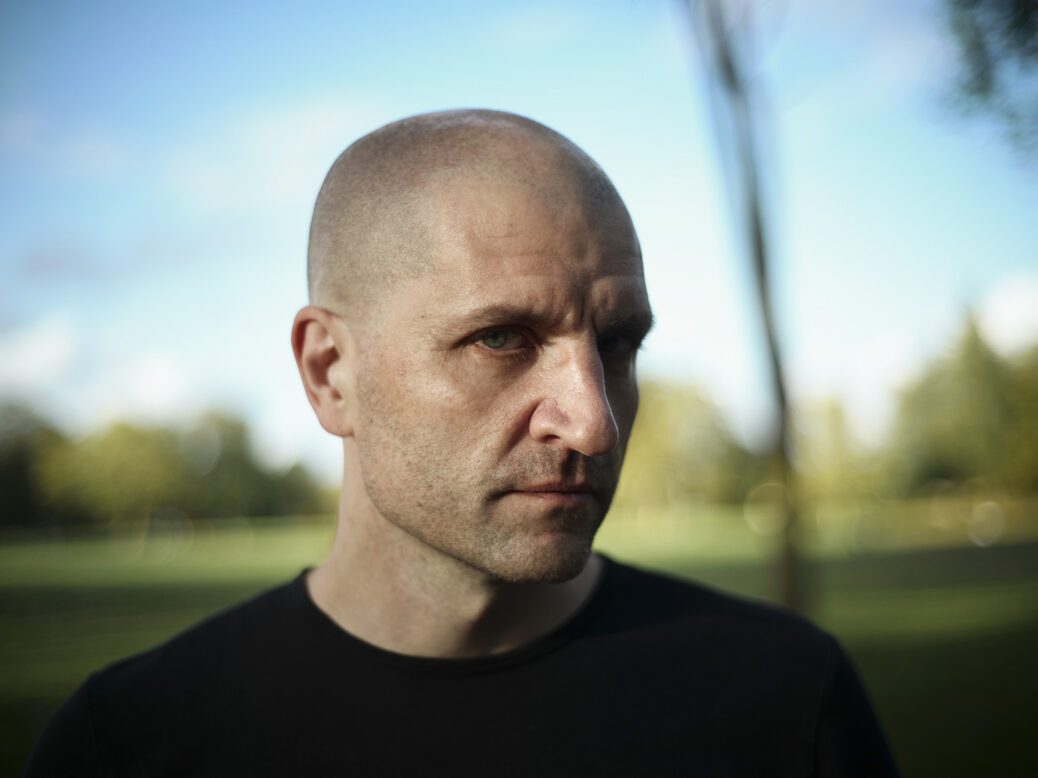
The Goldsmiths Prize exists to reward fiction that breaks the mould or extends the possibilities of the novel form. The Rouse by China Miéville dramatically does both. There has never before been a novel remotely like it. It is, says Miéville, long the leading light of the “New Weird”, the book of his life, twenty years in the making: his magnum opus, his white whale.
Classic supernatural fiction, from MR James to HP Lovecraft, has always been short, more suggestive than comprehensive.The Rouse, though, is a ghost story on an epic scale, coming in at no less than 1246 pages. In draft, it was twice as long again. “It ended up accreting more and more and more until it became about everything,” Miéville admits.
The Rouse opens with a beautifully written 96-page realist story about a hippy-ish young woman, Maur, becoming a single mother in London in 1973. Her son, Ewan, grows up a stranger to her; he is militaristic, joining the RAF in adulthood. And then she’s told he has died, aged 22, in a training camp, in mysterious circumstances reminiscent of the Deepcut scandal.
The End, an otherwise blank page states. But death is not the end; perhaps it is not even death. An Epilogue follows – the most immense epilogue ever.

The plot develops through a dual narrative, physically separated by being printed on differently toned paper but ultimately entwining inseparably. In one of the stories, Maur searches for the truth about her son, uncovering weird conspiracies. In the other, we encounter a soldier, Stallo, who is part of The Unit – a secret project that seeks ways to weaponize the undead, revenants, “lespries”, “suppletions”, in decades of post-colonial wars, from Malaysia to the Falkland’s. Among much else, it is a deeply political work, as might be expected from Miéville. Gothic Marxism, no less.
The writing makes high demands on the reader, never offering clear explanations or connections; fragmenting the timeline without any signposting, looping back and forth, breaking the narrative with found texts and prose poems. Miéville’s composition is a maximalist treasury of the arcane, deeply learned not just in occultism but in the global anthropology of the undead.
Nor does he ever give any clear view of the supernatural entities themselves, for they are beyond words, the way words fail being actively enacted here in the cause of effing the ineffable.
Miéville fully intends the reader to be a bit baffled, forced to take the book at its own pace, to live with it over the long term. For length itself is intrinsic to its form. His dream reader, he says, might read 20 pages a day for several months and come back to it repeatedly. He compares the challenge to that posed by Thomas Pynchon’s Gravity’s Rainbow, which took him six attempts to finish.
The Rouse, then, was never designed to facilitate the rapid assimilation required by prize-judging. Yet, as a panel, we ended in no doubt at all that it is everything that the prize exists to recognize: Miéville’s work is entirely new, limitless in ambition, endlessly engrossing, a truly astonishing accomplishment. Re-reading awaits.
Read interviews with the shortlisted writers here.
Content from our partners



Related
Join the debate
Subscribe here to comment