
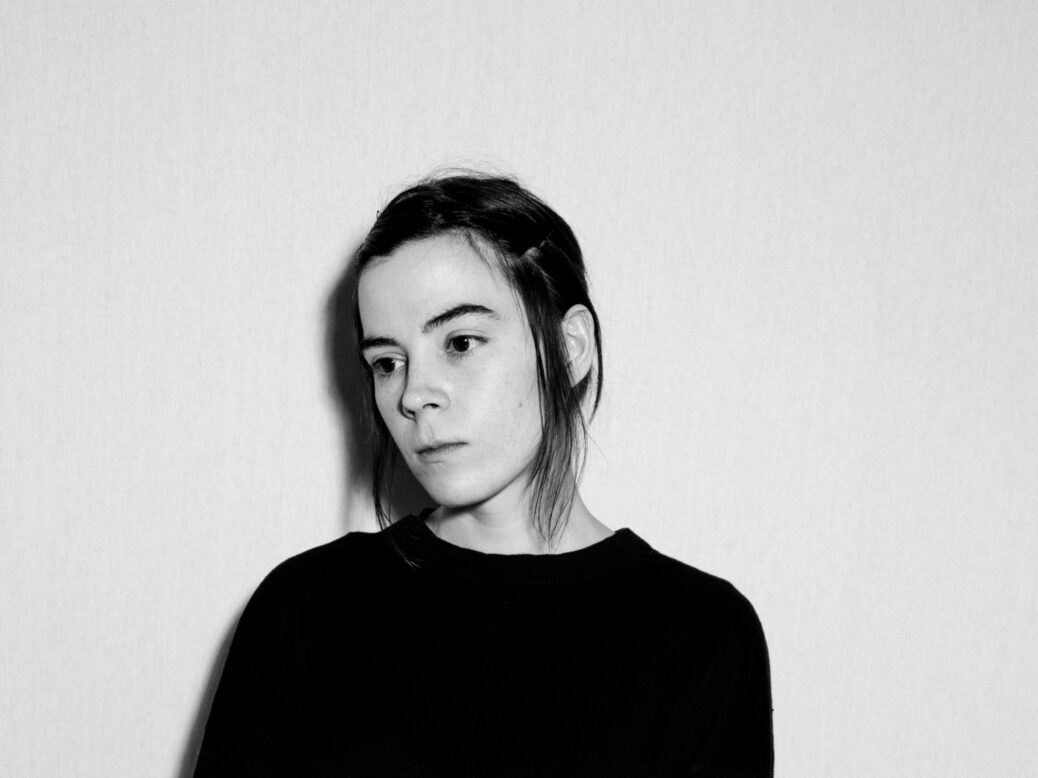
Missouri Williams is a British award-winning novelist based in Prague. The tone of Williams’ gothic debut, The Doloriad (2022), which won the 2023 Republic of Consciousness Prize, was compared to that of Nobel Prize for Literature winner Lászlo Krasznahorkai by literary critics.
William’s second novel, The Vivisectors, which was longlisted for this year’s Booker Prize, continues with the themes found in The Doloriad: environmental cataclysm, ethics and philosophy.
A city famed for its university is overrun by uncontrollable vegetation as the academics and gardeners fight for power. In what is described as “extraordinary prose” by the Goldsmiths Prize judges, the novel’s narrator, Agathe, takes the reader through a scandal that erupts in the university while dissecting the ongoing societal issues, the battle between progress and tradition, and relationships between the characters of the novel. In the words of Kate Briggs, a writer, translator and judge on this year’s Goldsmiths Prize panel, The Vivisectors is “singularly strange, ambitious and brilliant.”
Zuzanna Lachendro: The Goldsmiths Prize was set up to reward fiction that “breaks the mould or extends the possibilities of the novel form”. What can an “innovative” approach offer the reader (and writer) that a more conventional novel might not?

Missouri Williams: The kind of novels that I am interested in invent their own terms of engagement. They add something new to the world. Reading them feels like a confrontation. There are so many writers and novels that I value for the way that they have changed me. I don’t think it’s possible to write something meaningful without thinking about form in some way.
The Vivisectors is a novel that weaves many subplots into the narrative and is occasionally broken up by conversations between individuals, like the gardeners or the students, in a stage play format. What was your process? How did the book come to be?
I knew that I wanted to write a book about the difficulty of interpretation, and so it made sense that the book would be something that is difficult to interpret too. The subplots and choruses are intended to comment on and undermine the central narrative voice, that of Agathe, which is often – to the point of absurdity – very certain in its judgements and proclamations. The result is a novel in which very little can be trusted. I’m not sure how to describe my process. I have an idea of what I want to achieve, and I do my best to figure out how to make it happen.
Nature is a key theme in the novel. In many classic and contemporary literary works, nature is a device used to emphasise beauty, orderliness and purity. You subvert that entirely. In The Vivisectors nature represents chaos, decay and an almost tyrant force. What was your reasoning behind this?
I have always been interested in the idea that what we can control is limited, and I wanted to explore that here, just as in my first book. But I think writers have often been drawn to images of orderly or disorderly nature. The garden as a symbol is so rich and so obvious. There’s almost nothing that you need to establish because the trope itself is so redolent. It means you can do what you want with it. I was reading a lot of Edmund Spenser and Andrew Marvell at the time, and I loved their good and bad gardens. Then I thought that I’d make up my own.
Throughout the book, you dedicate entire pages, using the voices of the characters, to critique numerous things: the publishing industry, the treatment of foreigners, exclusivity of higher education. It reads like a social critique. Did you use the characters in the novel to articulate your own opinions? What was the driving force behind this?
The Vivisectors is a story about the problem of interpretation filled with characters who are determined to interpret everything. I wanted it to examine the idea of discourse itself. The various monologues are part of that. I think when we conflate the author with their characters, we lose a lot of what makes fiction valuable.
Further to the previous question, there are many themes in the book that stand at the intersection of the reader’s reality and the protagonist’s fiction: the ecological crisis, political unrest, the ceaseless tension between progress and tradition. What are your thoughts on the statement: “The best pieces of fiction contain an element of truth”?
I think fiction has its own kind of truth. But for me this truth is an emergent or transcendent quality, something that arises from the arrangement of its parts. It’s not a map or a mirror either.
Around the halfway point of the book, the protagonist, Agathe, explains that the novel is a confession without offering further explanation. Earlier, she mentioned that what we are reading is not the truth, but a story. These two things seem at odds with one another. How did you intend for the readers to receive the book?
A confession can be hidden in a story. Agathe translates her experiences into fiction because she can’t express them directly, though the extent to which what she relates reflects or distorts the ‘truth’ of what has happened to her is something the novel doesn’t attempt to resolve. In many ways, the novel is about storytelling, why we do it, what we hope it might achieve. I didn’t intend for the book to be received in a particular way, and the very different responses that readers have had are always interesting to me.
The Vivisectors leaves a lot left unsolved: what happened to Agathe’s family involving the staircase? What will happen to the academics and the gardeners? These questions leave the reader thinking about the narrative long after they finish the book. Was this intentional? Do you think you will expand on this plotline in future novels?
Yes, that was intentional. I’m not interested in books that tidy everything up for their readers. I think continuing to think about the book after you have finished reading it is usually a good thing. I like to use the same names and figures over and over, so there will most likely be other Agathes and Adams.
Tell me about a piece of art, literature or music that was important to you when writing this book.
Coil’s song “Fire of the Mind”. I had been thinking about St. Augustine writing that angels have no need of reading because they behold God directly, and when I listened to this song for the first time I felt as if I had understood why someone might envy them.
What past British or Irish novel deserves a retrospective Goldsmiths Prize? Why?
The last few years I’ve not been reading enough books in the right century to answer this question well, and so I’ll have to reach quite far back. Samuel Beckett’s Molloy, if it counts. That novel breaks everything.
Why do we need the Goldsmiths Prize?
It’s great that there’s a prize for novels that are difficult and strange. I’ve loved all the books that the prize has helped me to discover.
“The Vivisectors” by Missouri Williams is published by Fourth Estate. The winner of the 2026 Goldsmiths Prize is announced on 4 November. Read more interviews with the shortlisted writers here.
Content from our partners



Related
Join the debate
Subscribe here to comment