
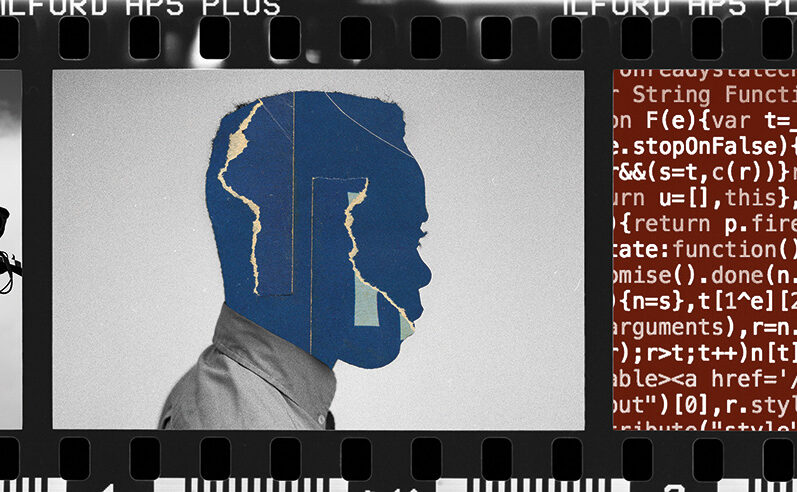
Mortal life is strange. Things change constantly, and we never know what the hell is going on. This feeling may be perennial, but there are variations from one era to the next. In our digital age, we contend with the dreamlike realities of Big Tech, in which venerable questions about the nature of reality and truth merge with debates about AI slop, deep fakes and the hallucinations of large language models (LLMs).
How did this happen? Whose dreams are we being induced to dream? Who controls the future? These questions, among others, are central to Ruben Andersson’s Age of Security, a forensic and furious book about the global phenomena of omni-surveillance and “Big Security”, which, he argues, threatens privacy, freedom and democracy.
Andersson is a social anthropologist at Oxford University whose books combine meticulous research with striking paradoxes. For example: Wreckonomics (2023, co-written with David Keen) argues that the so-called wars on drugs, terror or migration exacerbate the crises they were designed to abate. Now he presents another arresting paradox: that Big Security – “intrusive methods of surveillance, coercion and control” – shatters trust, foments paranoia and fails even to keep us safe. How have we arrived, he asks, from the dreams of the early digital age to this nightmarish “psychodrama of the fractious West”? Why do we feel that “the future is a threat and that there is nothing we can do except scramble to save ourselves as best we can”? How can we rediscover hope, and can our democracies survive?
First, writes Andersson, there are some necessary caveats. It is understandable that we feel insecure in our perilous world, and this is not the first age of security. Elizabeth I employed legions of whispering spies. When postal services began in Europe, autocratic monarchs immediately issued orders for mailbags to be searched. In the late 18th century, Jeremy Bentham designed his panopticon, founded on a notion that the awareness of being watched must induce compliant behaviour. In the 20th century, telephone and radio interception “gave birth to a paranoid reality of invisible enemies and creeping surveillance”. The CIA, the National Security Agency and the FBI emerged as the “pillars of the US national security state”. During the Cold War, the Stasi devised their own “brutal” and “bizarre” methods of surveillance and control: wiretapping devices, hidden cameras, the destruction of livelihoods and reputations, detention, forced exile. Then came the collapse of Soviet communism and the simultaneous emergence of the World Wide Web. The old world seemed to have been “washed away”, writes Andersson. Alas, this was only “a brief respite”.

For Andersson, a key difference between the past and present is that “our security obsession is a truly global phenomenon”, an “unholy alliance of state and corporate power” and, surreally, that “its fuel is our most intimate fears”. At the start of the digital age, tech companies benefited from cyber-Cartesianism, an initially utopian idea that the virtual world was a distinct realm from the corporeal, and must be unregulated and free. “We will create a civilisation of the Mind in Cyberspace,” proclaimed John Perry Barlow in 1996. But soon, companies such as Google and Meta decided that the most lucrative resource of the burgeoning web was… the civilisation of the Mind in Cyberspace: our posts, web searches, intimate messages; outpourings of love, despair, joy and rage. This global hack accelerated the AI revolution, with our data being used to “train” LLMs.
Now, as Andersson writes, the latest resource frontier is Big Security. This security monster is “mad, bad”, “hungry for our data” and “hungry for people, who it perceives as threats”. Features of Big Security include: drones, pre-crime policing, autonomous weapons, biometric authentication including facial recognition, “smart” cities, borders and homes. “Sauron, move aside,” writes Andersson. “Big Security is rising.”
One “great seductive promise” of Big Security, he continues, is “full-spectrum control over an unruly human world”. After 9/11, the US military decided that “risks had to be pre-emptively snuffed out before they could become threats”. Dick Cheney, for example, proposed that a “1 per cent chance” of a major threat to the US must be treated “as a certainty in terms of our response”. This is founded on a notion that predictions are accurate and converts slender chances into proto-facts. Why, asks Andersson, must we sacrifice fundamental freedoms and rights for an impossible dream of “full-spectrum control”? Why must our governments and corporations turn improbabilities into probabilities, then use these anti-mathematical premonitions to justify surveillance? And does this utopian/dystopian model (depending on who you are) even make us particularly safe?
In Bäckby, a residential suburb of the Swedish city of Västerås and Andersson’s childhood home, billions of kronor have been invested in a “hard security turn”. Yet the local school has closed, gangs menace the town square, the police are absent. In Bäckby, and in Sweden generally, writes Andersson, illusory threats are elevated to crises, while real threats are ignored. For him, this is one of the fundamental flaws in “security thinking”.
This leads him to what he calls the “Paranopticon” of contemporary China, where the maintenance of social stability has led to a monomania around security. City-dwellers navigate “forests of CCTVs and facial recognition – including via the Skynet system” that shares a name, “none too auspiciously, with the AI monster from Terminator”. Crackdowns on dissent are formidable. Despite this, “quiet rebels” play the security system, massaging social credit scores to reflect trustworthy behaviour or – if their earnings are tied to citizen-surveillance – reporting fake incidents. In this way, supposedly objective data is adulterated with careful fictions, writes Andersson: a “security theatre” that is increasingly detached from reality.
It is a mistake to see China as sui generis, he writes: “Pointing a finger at the Chinese surveillance dystopia frequently allows critics to ignore the fact that similar security powers are swiftly seeping into liberal democracies.” Instead, “the Paranopticon stands as an extreme example of a global rush for security at all costs, shared by supposed adversaries”.
In Western societies, we also contend with omni-surveillance. Andersson cites a great array of examples including: biometric authentication used freely in civilian settings; forests of CCTV cameras; the “little spyglass in our pockets”; watchful “smart” houses, cars, TVs and other over-friendly devices or appliances; the second-by-second tracking of workers across the gig economy, and so on. In this tech-panopticon, we each end up with a data doppelgänger – an uncanny double that stands before corporations and governments, formed from the ghostly fumes of our data. Surveillance is now so ubiquitous, so normalised, writes Andersson, that fighting it can feel like “stopping water with a sieve”.
This catalogue of woes should make for depressing reading, yet Andersson’s style is energetic, often humorous. His metaphor of the sieve reminded me of William James writing about how rigid conceptual schemes are “a sort of sieve” in which we try to gather up the world’s contents, and how most facts and relations fall through because they are too “subtle or insignificant”. Andersson’s argument is at times quite Jamesian: that omni-surveillance can’t capture small, subtle elements; that these supposed discards are the important and idiosyncratic aspects of our real lives.
The danger is that visible, lumpen concepts are mistaken by companies and governments for reality. This is like assuming reality is comprised of potatoes not water, on the basis of the rule of the sieve. “We are not pixels on a heat map of populations,” writes Andersson. “We are not empty vessels.” Optimism, he concedes, is tough when the omnipresence of omni-surveillance makes it hard to opt out. But we can become more opaque. We can leave smartphones at home, disable Bluetooth, make our uncanny data doppelgängers ghostly and indistinct. Regulation is important, as is a sense of data harvesting as a toxic industry, akin to asbestos or air pollution.
Despite conceptual decomposition and the weird state of the world, Andersson argues, optimism is politically necessary. We can see the world “not as doomed to disaster… but as thrillingly open”. The future “does not belong to the strongmen and securocrats, the doom-mongers and data barons. We must reclaim it.” Here’s to what cannot be sieved!
Joanna Kavenna’s latest novel is Seven (Faber & Faber)
Age of Security: The Rise of a Global Obsession
Ruben Andersson William
Collins, 342pp, £22
Purchasing a book may earn the NS a commission from Bookshop.org, who support independent bookshops
[Further reading: Salman Rushdie on terrorism in the modern world]
Content from our partners



Related
This article appears in the 16 Sep 2026 issue of the New Statesman, Will AI kill us all?
Join the debate
Subscribe here to comment