
At his May 2026 trial for possession of crystal meth, former MP Crispin Blunt’s story was presented by the prosecutor as a classic and tragic tale of a man’s descent from high office and heterosexual marriage into a life of group sex parties facilitated by high-octane psychotropics and homosexuality. “It was the first time he had come out as a gay man and during his ministerial role he saw first-hand the harm caused by the government’s drug policy,” said the prosecutor, outlining Blunt’s role as prisons minister. “Then he began his involvement in the chemsex scene.” Mere proximity to that scene, it seemed, was enough for even a respectable politician to be pulled into its intoxicating orbit. To the outsider observer it must seem sad, inexplicable and – whisper it – perverse. “Why are gays still like this,” people will ask, “now we’ve let them be normal?”
It’s well over a decade since the chemsex phenomenon broke through into a heterosexual mainstream awareness. Chemsex parties are events where gay men take illegal drugs – meth, mephedrone and GHB – to loosen sexual inhibitions and intensify sexual pleasure, often with multiple partners. In that time, public health approaches, and gay sex practices, have developed pragmatically, focussed on harm reduction. The wider public conversation, however, is still more interested in the shock and the scandal, and the literary representations of the subculture still put salaciousness first and foremost. However, a new and more mature consciousness is gradually developing. In his new novel Fruit Fly, actor-turned-mental health nurse Josh Silvers addresses not so much chemsex itself, but the way it is represented and perceived – with disgust, prurience and anxiety, all inflected with homophobia. What is it about the lifestyle and the anguish of young gay men, the novel asks, that is so attractive to those with no stake in the chaos?
Narrated in alternating first-person streams of consciousness, Fruit Fly is a dialogue between Leo, a young, homeless gay guy engaged in a cycle of drug use and group sex from which he can’t escape, and Mallory, a young north London novelist struggling with writer’s block. After a Reddit post suggests that, if she wants to have another hit novel, “the perfect blend is gay AND sad,” Mallory downloads Grindr and finds herself sat in her car outside a chemsex party to which she has catfished an invitation. By chance, she sees Leo’s violent ejection from the party, and comforts him. Having been thrown out of his halfway house, Leo is bouncing between chemsex parties hosted by older men, looking for a cheap high, sex for money, or just a place to crash. Mallory poses as a therapist to win his trust and harvest his life story for a new novel. The contemporary literary market swiftly confirms that gay and sad really is the perfect blend.
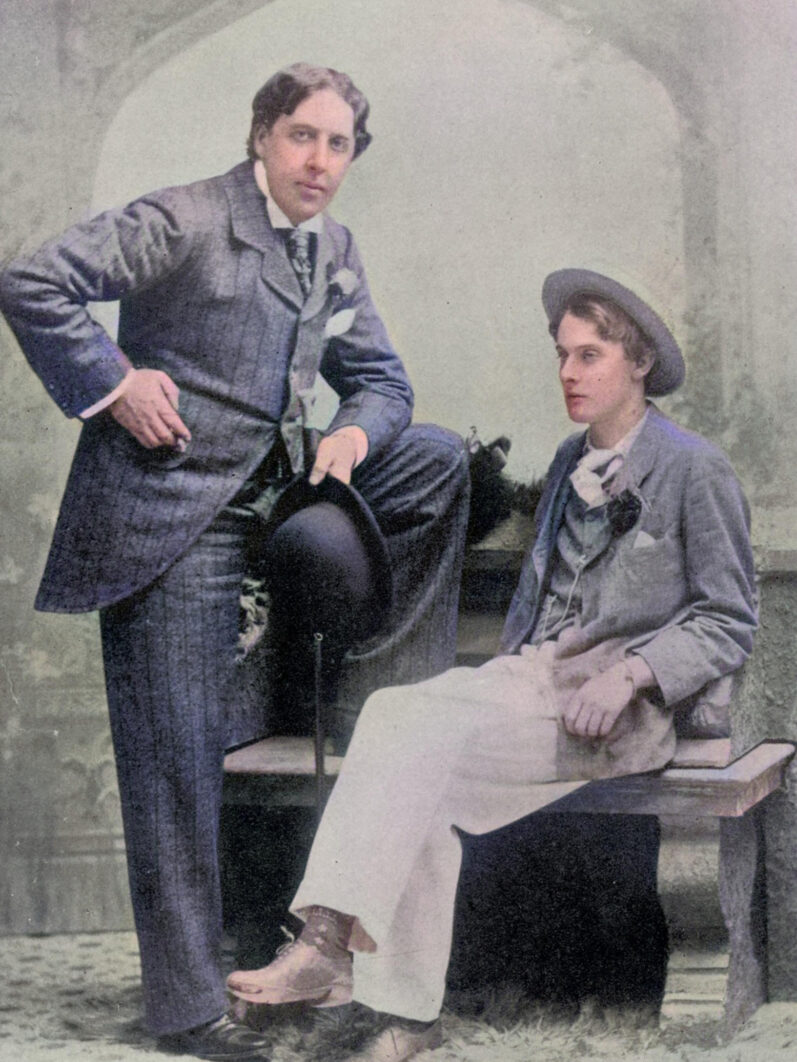
Gay tragedy has always sold well. Early depictions by straight authors often tended towards a moralism that matched the legal prohibition on same-sex entanglements, while queer authors like Oscar Wilde and Radclyffe Hall leaned into the pathos of queer life. In Fruit Fly, however, Silvers satirises a more contemporary strain: one in which authors overidentify with certain gay male characters as avatars of vulnerability while gay men in general stand in for the worst of oversexed, overconfident, cruel masculinity. The contemporary archetype here – one Mallory herself refers to – is the 2015 publishing sensation A Little Life by Hanya Yanagihara, a novel which dips its characters again and again into a melodramatic cauldron of drug abuse and paedophilic homosexuality. Just what was it about the abuse of the frail protagonist by other gay men that so many readers found appealing?

Mallory shares with Yanagihara what critic Andrea Long Chu called “a touristic kind of love for gay men” – a world in which good, vulnerable, young, and often not-really-gay gay men are exploited by older, sex-obsessed and predatory gay-gay men. It’s a world where, to quote Crispin Blunt long before he came out, “there is a much greater strand of homosexuality than of heterosexuality which depends for its gratification on the exploitation of youth.”
Such attitudes lurk beneath seemingly tolerant attitudes towards gay men. Lurid depictions of chemsex parties are a perfect place to take them for a ride. Chemsex culture is alien to most people, including most queer people. But such depictions feed into a suspicion that gay men’s sexual desire is an unrestrained and predatory force, an unbalanced gyroscope of lust that throws off all conception of connection or care with an uncontrollable centrifugal force. Chemsex parties are portrayed as the sort of decadent behaviour that 30 years of gay conservatism were supposed to address. In his 2003 article “The Conservative Case for Gay Marriage”, the right-wing gay commentator Andrew Sullivan made just such an argument for the legitimation of gay marriage to address homosexual promiscuity. “Conservatives have long rightly argued for the vital importance of the institution of marriage for fostering responsibility, commitment and the domestication of unruly men,” he wrote. “Bringing gay men and women into this institution will surely change the gay subculture in subtle but profoundly conservative ways.”
Behind the pearl-clutching headlines about chemsex lies an uncomfortable realisation that this hasn’t quite worked, and with it, the nagging suspicion that it’s something about gay men that makes them (us) like this. For the media, chemsex offers a perfect storm of sex, crime and outrage. The murders of Eric Michels, Gordon Semple or the victims of serial killer Stephen Port, all of which involved the use of chemsex drugs to incapacitate or even kill victims, filled newspapers with discussions of “chemsex killers” and “secret worlds”. These are the images that persist, from journalistic representations straddling yellow journalism and campaigning journalism. They resemble WT Stead’s infamous reports into child prostitution in Victorian London, which sold their worthy cause with sensationalist prose describing the sexual abuse of young girls. That line between humanitarian concern and vicarious sadism remains blurred today.
Representations of chemsex seldom get far enough past appalled prurience to examine why people enjoy it: what sense of connection, pleasure or value it brings. Fruit Fly doesn’t either, which is perhaps the point. The novel is at its best when it satirises heterosexual fixation, with Mallory’s extravagant fantasies of homosexual sex cultures. Mallory’s obsession with Leo’s world allows her to avoid the horror of her own abusive and failing marriage, and her own hopeless suburban ambitions. The realities of her own life are as violent and exploitative and sad as the gay parties, yet are somehow pedestrian, commonplace, and maybe even cosy. An unhappy heterosexual marriage to a horrible man is, after all, at least normal.
Chemsex should be fertile ground for fiction. Like drinking and like club drugs, it is potent precisely because it reconfigures social relationships and allows people to be different to who they normally are, who they have been told they are. Contemporary novels such as Romeo & Seahorse by Nikolaj Tange Lange or Robyn Skyrme’s upcoming novel Old Owl and Matt do offer nuanced depictions of chemsex, because they address both its highs and lows, that sense of fully realised human desire and its often calamitous human cost.
Fruit Fly, by contrast, explores the unequal revulsion that chemsex elicits from a heterosexual public. Excluded from entry, the straight reader allows themselves to conjure up all kinds of queer monsters. The use of stimulants to facilitate sex is hardly new or exclusively homosexual: without the pub and its dispensing of proverbial “social lubricant”, English heterosexuality may well have extinguished itself centuries ago. But chemsex alone seems to generate exactly the sort of vicarious fascination that Mallory writes into her novel. And in the end, disingenuous concern for chemsex’s “victims” only exacerbates its dangers and the risks of knee-jerk reactions. Stead’s journalism led directly to the introduction of the crime of “gross indecency”, used to persecute gay men for generations. Stephen Port’s young victims were initially written off by the police, left uninvestigated as the accidental overdoses of “gay druggies”. Despite Blunt’s earlier homophobic politics, on the issue of drugs and chemsex, he might be worth listening to when he says that honesty, harm reduction and an end to the catastrophic policy of prohibition will help drug users better than shock and sensationalism. But Fruit Fly touches upon a deeper dynamic: that normalcy chokes and suffocates the normal people who enforce it just as much it damages the perverse, on to whom they shift their prurient moral gaze.
[Further reading: Patricia Lockwood: “You know how women marry their dads? I married my mother”]
Content from our partners



Related

Join the debate
Subscribe here to comment