
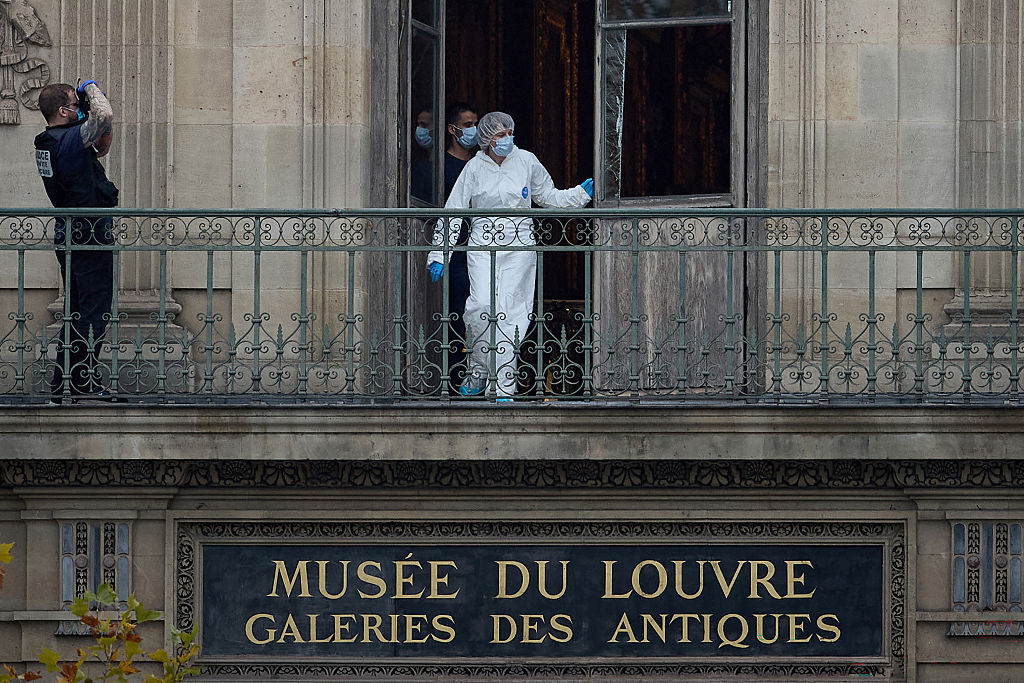
This is proving a bad time for French museums. Since November 2024, there has been a spate of thefts, the most high-profile being the audacious break-in at the Louvre last year when a cluster of the French crown jewels were stolen. They have yet to be recovered and it is unlikely they ever will be. But also, 2,000 gold and silver coins were taken from the Maison des Lumières, 13 pounds of gold were stolen from the Natural History Museum in Paris in September 2025 and various ceramics, the earliest dating from the 14th century, were taken from a museum in Limoges that same month. There have also been thefts at the Cognacq-Jay Museum in Paris and the Hiéron Museum.
Now there has been a break in at the Renoir Museum in Cagnes-sur-Mer in the South of France. The museum occupies the painter’s former home, a Provençal-style villa he had built in 1908, overlooking the town and the sea, where he lived in the hope the warm air would ease his crippling arthritis (an assistant had to push a brush between his bent fingers so that he could paint). The house sits in its own grounds, amidst an olive grove and a sprinkling of orange trees (from which his wife Aline made marmalade) and is home to 13 of his paintings as well as 40 of his sculptures.
It is not a hugely secure site. Thieves wearing helmets, gloves and combat clothing hacked their way through perimeter fencing and used an electric saw and a hacksaw to remove four paintings from the walls, cut them from their frames and scarpered, dropping two of them in their haste.
What is not clear is why. Paintings are the least saleable form of stolen art – too recognisable for the open market, and of interest only to crime clans as collateral and, or so rumour has it, to some Middle Eastern or Oriental collectors keen to have a high-grade artist at a knock-down price. Eastern Europeans are thought to be the main culprits.

The majority of museum thefts are of objects – which are easier to transport and hide and, in the case of bullion and jewels, to melt down or recut. Paintings, if taken for ransom and nothing is paid, are essentially worthless. As Robin Simon, editor of the British Art Journal, puts it: “Paintings are daft things to steal”.
Renoir was a prolific painter – he made some 5,000 works – and the stolen works, all portraits, will diminish his public representation, but hardly fatally. More serious was the theft in August of six vanishingly rare paintings by the 15th-century Italian painter Antonella da Messina from his Sicilian hometown. There has been no sign of them and their loss is cultural and historical catastrophe for the city. The Mafia is thought to have been involved.
But this is a time of art thefts. According to Interpol, in 2021 alone there were some 10,000 crimes committed involving cultural property, the majority taking place in Europe. Thieves, encouraged by the success of their peers, know that while new museums are designed with security in mind, older institutions have fallible systems and protocols and are often too large to guard properly. Meanwhile, Europe has open borders and prison sentences are rarely draconian. It makes them an attractive prospect for any would-be Raffles. Small wonder that the Renoir Museum seemed a good choice.
The idea that paintings are stolen to order by some criminal connoisseur is mythical. Art crime is more usually merely transactional – either for a brisk financial return after negotiations with insurance companies or to be held in kind as part of a wider criminal enterprise. While there is a narrow window in which to recover stolen works, they are often returned after a ransom has been paid (which may or may not be the aim behind the Renoir heist), or left to be found randomly when it becomes clear that the stolen work is more of a liability than an asset – as was the case with a painting by Titian, The Rest on the Flight to Egypt, which was taken in 2024 and later left in a carrier bag at a London bus stop. Some stolen paintings, however, such as the 13 works – including a Rembrandt and a Vermeer – that were taken from the Isabella Stewart Gardner Museum in Boston in 1990, never make it home.
The stolen Renoirs are not of that order so the thieves may well find that the valuation of some €9m is a fantasy figure and their actual rather than nominal worth is a fraction of what they home. In which case, there is a decent chance they will find their way back to their villa and Mediterranean vantage point.
[Further reading: The right doesn’t get Banksy]
Content from our partners



Related



Join the debate
Subscribe here to comment