
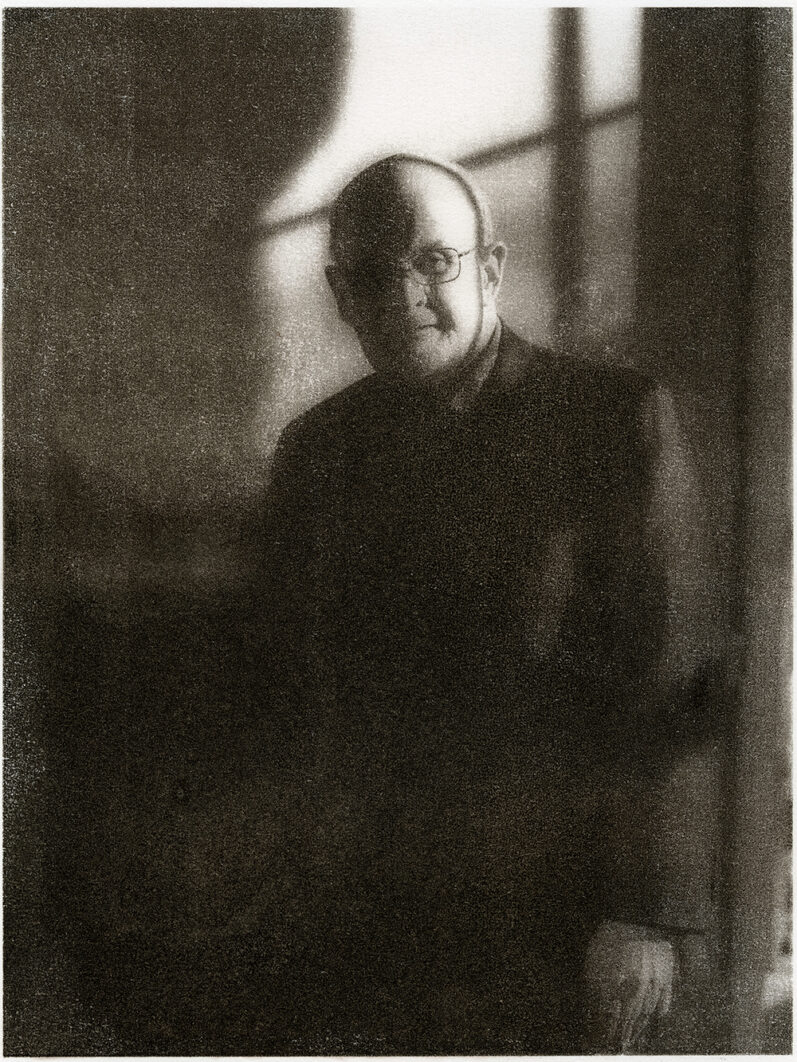
Salman Rushdie has been determined not to live a life, in his words, “defined by terrorism”. But terror has sought the writer out time and again in the past 40 years, ever since the publication of his novel The Satanic Verses (1988) and the furious controversy around it. He had believed his life of isolation and caution was a closed chapter, after Iran appeared to step back from the fatwa issued by Ayatollah Khomeini.
But four summers ago, in a quiet lake town in upstate New York, death came knocking again. He was nearly assassinated by a knife-wielding terrorist. The story of the attack, the survival and the recovery is told in his memoir Knife and now again in a documentary film, directed by Alex Gibney.
No living writer has been more grimly haunted by the spectre of terror. Twenty-five years ago, New York’s World Trade Centre was attacked by terrorists motivated by the same ideology as his would-be assassin, and there is, he feels, a “line of connection” between the two attacks, the one on his person and the other on his adopted home.
On the eve of the 25th anniversary of 9/11, Salman Rushdie spoke to me on The New Society podcast about living in an age of terror.

Tanjil Rashid: Four years ago, you were attacked; almost four decades ago you were declared an apostate and placed under a fatwa that threatened your life. You’ve been living personally with the threat of terror for half your life. How would you say it has shaped you?
Salman Rushdie: For almost 25 years before the attack four years ago, I had not been living under threat – or at least I felt I’d not been living under any kind of threat – because the clouds seemed to have passed. For more than two decades, I was leading a fairly straightforward writer’s life. I had come to think of that part of my life as a closed chapter. Then, thanks to the actions of one misguided youth, the past was dragged forward into the present.
You’ve now revisited the attack twice, once as a book and, and now as a film.
It’s interesting because the memoir and the documentary in a way were being made in tandem, side by side. I was slightly ahead of director Alex Gibney’s work; I finished before the film was finished. But a book is something you write by yourself. You sit alone in a room and try and wrestle with your subject matter and make sense of it. The film was a three-way collaboration. The first and most important part, without which there would not be a film, is the footage that my wife, the writer and artist Rachel Eliza Griffiths, shot both in the trauma ward and afterwards for about a year to chronicle the recovery. That footage we showed to Alex Gibney when we became interested in the possibility that it might have a more public life. And so the three of us became the filmmaker.
Since you have shared the creative process, did you encounter any differences in how the same events have been interpreted?
Not exactly. What Alex was very insistent on was saying that we had to go back to 1989 and revisit everything that happened then. I was initially reluctant. What eventually persuaded me was when he said, “Look, it’s so long ago that many people, anybody under 40 really, are not going to remember anything that happened then. So they won’t understand the meaning of this young man’s act if you don’t provide that context.”
There’s an interesting question of perspective here: when does this story begin? Why were you reluctant to see what happened to you in light of what happened in 1989?
Just because I’ve lived with that story for a very long time, and I’m frankly fed up of it!
Of course you accepted the arguments of Alex Gibney that many people did not know the context. Among those people who weren’t alive then to know the context was the attacker himself.
And also, rather shockingly, he didn’t seem to feel the need to know anything. By his own admission, he had not read anything I’d written. He said he had read something like two pages of my work. (He didn’t specify what two pages they were.) His level of ignorance of me and my life and work was almost total. It made me feel there are people who can be led in a certain direction and pointed, and then they just go in that direction.
His mother gave an interview, in which she said that until he went to visit his father in Lebanon, something like four years before the attack on me, he had been a perfectly regular New Jersey kid growing up in America as an American, even though his parents were of Lebanese origin.
But he came back from his visit to his father in Lebanon, his mother says, transformed and, in the current usage, radicalised. And for four years, I don’t know what happened. But it’s clear to me that he went down the road that he had started going down on his visit to Lebanon. His father’s village, according to the article, was a quite heavily Hezbollah village. So he came into contact with those ideas and went down that road.
This will be a familiar story to many of us who have followed developments in the Muslim world and in the Muslim diaspora. And it also shows us how this personal event connects with larger global forces. Would you accept that?
Yeah. He’s been through two trials, and the second one was a terrorism trial in which he was accused of having supported Hezbollah. He was found guilty. So he was convicted of terrorism. It does link to the larger subject of terrorism in the modern world.
We’re talking on the eve of the 25th anniversary of 9/11. It seems to be an event of considerable importance in your life. You reference the attack on the Twin Towers in the documentary. For many of us, the age of terror begins with 9/11, but you were sort of catapulted into that age a decade before the rest of us.
Well, I did feel that there was a line of connection between the two, between the small event, which was the attack against me, and the much greater event, which was the attack against New York City.
I remember being very struck by some quite senior American journalists saying to me after the 9/11 attack, “Oh, now we understand what happened to you.” And I thought, “Really? Almost 3,000 people have to die before you understand something obvious?” But actually, what I understood of what they were saying is that now it had happened to them. And it made it personal.
I had only just moved to live in New York and made it my home, and it was a really shocking thing to happen in one’s new home. I had only once or twice been in the Trade Towers, and they were such gigantic and impressive buildings that the idea that they would vanish seemed unthinkable. Yet that’s what happened.
Where were you at that exact moment?
I was in Houston, Texas. I had just begun a book tour for my novel Fury. And then of course I was stuck in Houston for a few days because of all the planes being refused permission to fly. When I flew back to New York some days later, it’s one of the most unforgettable sights to look out of the window of the aircraft and see these columns of smoke rising from where the towers had been.
It’s interesting your friends had told you that what happened to you with the fatwa was a kind of premonition of 9/11. I’ve actually been reading your work from before that time, and it seems characterised almost by premonitions of plane crashes and plane hijackings. Obviously, the opening of The Satanic Verses, a plane crash of metaphysical significance. You also wrote, in a December 1999 column on “Islam and the West”, about the crashing of EgyptAir Flight 990. You even wrote, in a column from August 2000 entitled “Two Crashes”, about the Middle East peace process using the metaphor of a plane crash. It’s actually quite eerie to look at your writings just before 9/11.
Yeah, I wish my writing would stop coming true. It’s a bad habit that my writing has had. I think the answer is what writers do if they’re any good is that they pay attention. Writing comes out of the attention that you’ve paid. I guess I was looking in this direction at an earlier point, when most people were not looking in this direction. I think I just saw things that were there to be seen before they became colossal and visible to everybody.
They were already there in your imagination before they existed in the world?
Kind of. That’s what writing does. If you imagine the world properly, sometimes you get it right.
It’s an event that has really engaged you, I think. Step Across This Line (2003) involves some of the best writing I’ve read on the age of terror. I was struck by this line, “The attack on the World Trade Center was essentially a monstrous act of the imagination.” Why imagination? Can you tell us what you meant by that?
Well, because normally the terrorist uses a weapon, whether that weapon is a bomb or a gun or whatever it might be. The act of the imagination of the 9/11 attack was to understand that the aircraft itself could be the weapon. You didn’t need a weapon. The plane would be the weapon. That is a kind of mind-blowing idea.
It’s a kind of metaphor. It involves the same intelligence as a metaphor involves, seeing something as if it could be something else.
As if it could be something else.
I wasn’t in New York City that day, but I have many friends who had in various ways witnessed aspects of the attack. I know friends who were living downtown in Greenwich Village said to me that the first plane came down quite low and was using Fifth Avenue as a guideline to go down that straight line, and then went up to attack the building. Yes, it was a ruthless act, but it was an act which required, as you say, seeing one thing, an aircraft, as if it could be another thing, a bomb. And doing so, I mean, tragically effectively.
In that essay, you go on to say, “Murder was not the point. The creation of a meaning was the point.” Terrorism is so often dismissed as being nihilistic. But you believe there is a search for some kind of meaning here, a false one, an evil one, there is a search for meaning there.
Well, the United States had long believed that it was safe from foreign attacks, just because of geography, having oceans on both sides. And what the 9/11 attack brought home to everybody was that in the world as it is, geography doesn’t make you safe. There could be an ocean in the way, but that doesn’t mean anything. That was one of the meanings of 9/11, to tell America that it was vulnerable.
The knife attack on yourself, then, was murder the point or the creation of a meaning?
I don’t know because I’m not privy to this fellow’s inner thoughts. But it’s clear that he was in service of an ideology. Exactly what that ideology is, I can’t say. I can speculate. I think he was trying to show power of the ideology and to make a distinction between good and evil in which he was the good guy and I was the bad guy. A kind of moral inversion. Insofar as a meaning is trying to be constructed, it’s a meaning which inverts meaning.
You say you’re not privy to your attacker’s thoughts. But one of the most interesting things that you did in your memoir Knife was to portray a dialogue with your attacker in which you attempted to gain access to your attacker’s thoughts, to venture into your attacker’s mentality and motives. Why did you feel the need to do that?
And the film does it, too. It’s because I felt there was in my mind a mystery about him. Here is this young man who’s grown up in New Jersey, who is like everyone else, has never committed a crime. He has no criminal record. For somebody with no previous criminal record to be prepared to commit murder, that’s a very big jump, and I wanted to understand that jump.
And to complicate it, also to feel no need to find out anything about the person he wants to kill. And to further complicate it, to understand that what he is doing will drastically damage his own life, that he’s willing to sacrifice not just my life, but his own life in service of some idea. I found that puzzling and hard to understand.
And did you penetrate that mystery, do you think?
I don’t know because I don’t know what’s really in his head. But I hope I made a convincing version of what I think could be an argument. And one of them is that the passionate believer believes that the real world is not this world. The real world comes after this world, and if you behave in this world according to the tenets of your faith, then you will find yourself in a better world later on. If you think like that, you place a relatively low value on human life.
Why do you think people go from simply believing in an afterlife to believing that violence is something that secures their afterlife?
You’re asking the wrong person. But one thing to say is that he grew up in America, which as you know, is an extraordinarily violent society, in which lots of people find human life to be relatively lacking in value. This is why people can go and kill schoolchildren in their classrooms. This is why gun violence is almost a weekly occurrence. So if you grow up in a society in which life and death are treated so casually, then maybe it’s easier to pick up a weapon and conceive of an act of violence because you live in a society in which that’s become almost normal. In some ways, I think of this as a very American story.
It’s been almost 40 years since the publication of The Satanic Verses, and 25 years since 9/11. Are we any better at understanding this world that has been shaped by religious terrorism?
No, I think we’re much worse at everything, actually. For instance, I just think there’s been a real deterioration in people’s conviction in the merits of democracy and of free expression and of tolerance. In many parts of the world, including parts that I know quite well, the term secularism has become almost an insult. You see the weakening of that conviction all over the world has been distressing, because I didn’t think it was going to happen.
For the earlier portion of your life, the world was becoming more and more secular and more and more democratic. Now, it’s becoming less and less. Have you become a declinist?
I just hope I live long enough to see the pendulum swing again. I’m coming up for my 80th birthday. There is fashion in politics, as in all things. I’d just like to see the pendulum swing round and people regain their moral axis.
I know you’re a student of history. Do you have a cyclical conception of history? Pendulums swing back and forth?
I’m not a very good theorist, you know? I don’t write or think from a theoretical basis. But I do think that there are moods in history, as there are in human nature
There’s a wonderful book of short stories by the American writer Grace Paley, Enormous Changes at the Last Minute. That’s how I think of the world. We live in a time where there are enormous changes at the last minute. Things change very dramatically, very unexpectedly, and very radically. Things which seem permanent can be revealed to be impermanent, and that there can be enormous changes at the last minute. And so I retain a little measure of optimism that there will be further enormous changes in a better direction.
I love this idea that history can have moods, that it can be in a happy mood or a sad mood, or history can get out of bed on the wrong side one day.
Yeah.
There’s a memorable line from The Satanic Verses. “‘To be born again,’ sang Gibreal Farishta tumbling from the heavens, ‘first you have to die’.” You’ve confronted death many times now. Would you say your life has had a rebirth?
I never thought that before, but this time round I do feel that a little bit. It was not very probable that I would survive this attack. Even when I was airlifted to the emergency room, the doctors said to me that the loss of blood had been so great that they were not sure that they could save my life. And then fortunately, they were good doctors, and they did save my life. And it’s focused my mind onto the things I want to use my time to do, my work and to be with the people I love and care about, and to be in the world – to live in the world – as fully as I can.
These are excerpts from Salman Rushdie’s interview on The New Society podcast, which have been edited for length and clarity.
Knife will be in cinemas from October.
[Further reading: Does America even remember 9/11?]
Content from our partners



Related
Join the debate
Subscribe here to comment