

Basil the Great was shocked. It was 17 September 2024, and a friend had told him over the phone: “You’ll never guess what Farage has just said.” The Reform UK leader had declared that mass deportations were impossible.
“He can’t,” Basil said. “You must have misheard him.” His friend insisted he hadn’t. Basil – who is in his early thirties and from north-east England – wouldn’t tell me his real name, so I’m using the one he goes by on X, where he has 362,000 followers and a profile picture of a mouse dressed like a detective.
Despite Basil’s disbelief, there Farage was, in an interview with GB News’s Steven Edginton, treading comfortable ground. “If people come illegally, they should not be allowed to stay,” he told the presenter. “Simple as. Simple as.” Edginton pressed him: “But just back to the issue of deportations specifically. We’re talking about hundreds of thousands of illegal immigrants in Britain at the moment. Some estimates say the number could even be a million-plus. Do you support deporting all those people?” Farage sighed. “It’s impossible,” he said. “Literally impossible.” He threw his hands up in the air and shrugged, and a thousand British nationalist hearts broke.
In August, I met Edginton, now 26 and no longer working at GB News. He’d ended that interview with Farage on good terms. “I think he thought it probably went fine,” he said. But to Farage’s online base of mostly young men, who had clung to him as their best political hope, the interview – and another, two months later, in which Farage warned against “politically alienat[ing] the whole of Islam” – confirmed what many already suspected: that he couldn’t be trusted. Farage, the man who had spent his life battling the Conservative Party from the right, was just another opportunist, a charlatan, not fully committed to the change required to save the country. He was not actually one of them.

Young right-wingers, Edginton told me, don’t have the old loyalties to politician or party. They need a figure who takes their despair seriously, and if that person falters, they will look elsewhere. “People are really angry every day,” he said. “They open Twitter and they see some mad story about a migrant or something… They want someone to try and match their energy and emotions. If they feel that Nigel isn’t doing that, then that makes them even more angry, or even despondent, because they’re, like, ‘Well, what’s the point?’” In Edginton’s view, what many of these men want is a “Superman… People think, ‘We need someone to come and save us.’”
For a lot of disaffected Reformers that man is no longer Farage but his nemesis, Rupert Lowe, who was a Reform MP until a public spat with Farage last year over what he called Farage’s “messianic” leadership style. He launched Restore Britain as a campaign in June 2025, and a political party a year later. “I think he’s a man who’s very, very saddened by what’s happened to this country,” said Basil. Like the other defectors, he might be described as Farage’s errant political offspring, one of the bastard children of Reform now out to destroy the man they once saw as a hero.
Lowe is not all that different from Farage. Both are wealthy, public-school boomers (69 and 62, respectively) and Tory supporters who are instinctively pro-Thatcher, pro-markets and anti-immigration. Yet the young men who once clung to Farage are from a different world: radicalised by the internet, the job market, the diversifying and declining high street. They are fiscally apathetic and culturally extreme. Think of them as the new, new right.
Over the past six months, I’ve spoken to dozens of these men. (Although there are a few high-profile female provocateurs, this world is overwhelmingly male.) They dress formally and call each other “patriot” the same way a leftist might say “comrade”. Their references span the Old Testament, Marcus Aurelius and the video game Skyrim. They have a trollish streak, but many are Christian and morally serious; they advocate marriage and fret about degeneracy. They are sterner than their online personalities suggest.
In June, I messaged Will Coleshill, a Restore-supporting influencer and “freedom journalist”, asking for an interview. He sent me a 500-word response. “Our nation is suffering the most abject spiritual poverty, as a consequence of statist political oppression, such that it is engaged in a decades-long death spiral, the true suffering of which cannot be properly articulated,” he wrote. “I hope that this sufficiently illustrates the gravity of the situation and gives you thought as to duties which you, yourself bear.”
In some ways, these men don’t seem to matter: Restore stands little chance of winning more than one or two seats in parliament; their brand of politics and identitarian obsessions bear little resemblance to the country at large, according to any serious study. And yet, unlikely as it sounds, the social connections between half a dozen men between the ages of 18 and 35 has created a new politics that is bleeding into the mainstream. There is evidence that these men are pushing the country’s political centre of gravity further right, even as they are defeated in poll after poll.
Their brand of ethno-nationalist rhetoric might still be marginal in the country, but it dominates online conversations. It’s not just Britain: this kind of language is matched by the far right in the US and Europe. The AfD’s Alice Weidel has said she wants to deport four to five million people from Germany; in France, Marine Le Pen’s Rassemblement National polls comfortably ahead of other parties, while her further-right rival Éric Zemmour posts more and more explicitly racist videos. Everywhere you look online, you will find arguments of the sort being peddled by Restore’s base.
While Kemi Badenoch rebuked the racialist language of the hard right at this year’s Conservative Party Conference, she recently defended giving Lowe a Tory seat on the Public Accounts Committee last year, saying “Rupert Lowe turns up for work”. (Lowe has claimed he and Badenoch message “all the time”.) The shadow housing minister, Katie Lam, has called for some legal migrants to “go home” to make Britain a “mostly but not entirely culturally coherent group of people”. Meanwhile, spooked by Restore’s growing poll numbers, Farage has let his party be dragged into an explicitly ethnic dimension, warning that “anti-whiteness is institutionalised”. Mainstream politicians seriously debate whether a non-white person born in Britain can be English. The right is changing, fast.
It is changing Britain with it. Shabana Mahmood has risked fury from Labour MPs by doubling the qualifying time for indefinite leave to remain from five to ten years for most migrant workers – something unthinkable from a centre-left party a few years ago.
Restore has 140,000 members, one MP and 29 councillors (and another nine in its sister party, Great Yarmouth First). It polls anywhere from 2 to 8 per cent – similar to the BNP in its Noughties heyday. But in our fractured political system, that’s enough to transform the electoral map. Already, around one in ten of Reform’s 2024 voters back Restore, the pollster John Curtice told me. Even with a small slice of the overall vote, Restore has the potential to shatter Reform’s seat count: according to the pollster PF Global’s October model, if Restore wins 3 per cent in a general election, Reform would lose 27 seats. Every percentage point higher would cost Reform close to ten extra seats.
Reform and Restore are “largely working in the same waters”, Curtice said. But while they target similar demographics, Restore’s average supporter is significantly younger than Reform’s. YouGov’s latest polling put 25- to 49-year-olds as the most likely age group to vote Restore, while More in Common’s October survey showed that 28 per cent of people between 25 and 39 thought Lowe was doing a good job – more than ten points higher than any other age group. (Men were more likely to support Restore than women.)
This age gap is likely due to Restore’s online presence. Lowe has 900,000 X followers (he has earned more than £100,000 from posting on the platform since 2024) and 1.5 million followers on Facebook. Social media has given him a fanbase that stretches far beyond the UK. On X, Elon Musk often praises Lowe. Restore’s senior figures are in regular contact with Maga officials and Germany’s AfD.
Lowe’s punchy online presence sometimes contradicts the genial farmer who appears in parliament and interviews. He once told a bemused Spectator writer that he’d “never said… whole communities of British passport holders” should be deported. On social media, his tone is far more extreme. (A typical Lowe X post, from 12 October: “Islam, as practiced [sic] by millions of Muslims in Britain, is entirely incompatible with our British way of life.”) This disparity is largely because Lowe’s online operation is run by a young team led by Alistair Harrison, a surly ex-Ukip staffer.
Restore’s policy ideas are also shaped by a group of men: all 20-something, close friends and hungry for power. The online right’s favourite (and preferred choice for deputy leader) is Charlie Downes, the party’s 25-year-old campaign director and spokesperson. “Charlie wanted to rule the world,” a former friend told me. As a teenager, Downes had a YouTube channel on which he posted about video games and Pokémon. At university, he used the name “Kettlebell carnivore”, vlogging about his workouts and meat-heavy, anti-seed oil diet. He graduated into GB News appearances, floating around political parties looking for work. He applied for a job with the then Tory Robert Jenrick’s team and tried to set up “Reform Youth”. Both endeavours were unsuccessful. He wasn’t the right fit for Reform: Gawain Towler, Reform’s former director of communications, described Downes and his friends as “right-wing Corbynites” who saw any criticism as betrayal. “I’ve never seen any of them laugh,” he said.
Downes’s views have hardened. On X he has asserted that Restore views Britain as “a people defined by indigenous British ancestry and Christian faith”. Reform accused him of antisemitism when, in response to Farage saying he “could not be bought”, Downes posted a photo of Farage at the launch of the Reform Jewish Alliance. Downes’s fans were delighted.
Two of Downes’s closest friends hold senior roles in Restore: Lewis Brackpool, who, as the party’s head of investigations, attempts to dig up dirt on topics such as asylum contracts; and its senior policy fellow Harrison Pitt, seen as the most intellectual of the group. Their fourth close friend is Connor Tomlinson, a 28-year-old podcaster who has written policy papers for the party but does not have a formal role. These men – Christian, state-school educated – are unknown outside the online right. Yet they have become some of the most influential people in right-wing politics.
I asked Tomlinson – a self-described “reactionary Catholic zoomer” who has called the sexual revolution a “disaster” – if we could meet. “I presume,” he replied, “that there’s no trouble if my wife accompanies me?” I couldn’t think of any trouble, so in a café in Farringdon, I met the Tomlinsons – him in a suit and tie, her a summer dress. Mrs Tomlinson (her husband asked that I don’t name her) brought a gift: a slice of freshly baked Victoria sponge. She watched, smiling, as her husband told me about his journey into the radical right.
Tomlinson said he got involved in politics after watching as Britain became “enshittified”. “There’s endless processions of delivery drivers, there’s a lot more homeless people, everything smells terrible,” he said. Pronouncements like this made him infamous, quickly: “I have a slightly autistic penchant for saying things that are unpopular without even realising they’re unpopular.”
He is now an independent podcaster, but started his career with Lotus Eaters, a far-right podcast run by Carl Benjamin, who goes by “Sargon of Akkad” online. Benjamin is the organiser for Swindon Restore and said he was friends with “literally everyone” in the party. He used to be a troll: he was a key figure in the Gamergate harassment campaign of the mid-2010s, when thousands of male gamers became convinced that feminists were trying to influence the design and reviews of video games. He told the MP Jess Phillips after she spoke out against online threats to women in 2016: “I wouldn’t even rape you.”
But online trolls are serious now, and Benjamin, 47, has assumed an elder statesman role. In 2024, he apologised to Phillips over his comments, as he wanted to set “a better example”. On Lotus Eaters, he discusses Christopher Nolan’s The Odyssey (“modern slop”) and Britain getting more diverse (“They’ve stolen the countryside from us”). He told me the podcast gets up to ten million YouTube views a month, and its average listener is 32 and male. The podcast used to back Reform tentatively; now it supports Restore.
While at Lotus Eaters, Tomlinson met Pitt, Downes and Brackpool. They realised they had a lot in common and no political home. Tomlinson was banned from the Conservatives for anti-LGBT tweets and voting for Reform’s Richard Tice in 2021. He distrusted Farage, but thought Reform might open doors for a new generation of politicians after him.
After Farage’s interview with Edginton, Tomlinson gave up hope. “I was under no illusion at that point that [Farage] was going to be the answer,” he told me. At Reform conference a few days after the interview, he spoke on a fringe panel with Downes. On stage, Tomlinson and Downes argued Reform had to carry out mass deportations and “remigration”. “That got the Reform base on side,” Tomlinson said. Some senior party figures agreed with him afterwards, but he had made enemies of others in the party.
Two months later Tomlinson, Downes and Pitt met Lowe at a private seminar organised by the late Peter Whittle, who ran the New Culture Forum, a right-wing think tank. Lowe gave a speech, arguing that they should still back Reform. He then sat for an hour with the young men, listening to their criticism of Farage. This was a multi-millionaire, Thatcherite, public-schooled farmer, giving an audience to young men with whom he had very little in common and about whose lives he knew nothing. “But he listened,” Tomlinson remembered, “and he just said, ‘Right, you know what lads, I’ll take all those criticisms on board. I think they’ll strengthen the party. You’re the exact kind of guys we want to get involved.’”
Tomlinson thought Lowe was a man of principle, compared to other figures in Reform whom he saw as power-mad and dishonest. He found Reform’s increasingly campy vibe distasteful when the country was collapsing. “I went to a lot of caravan holidays as a kid, right? I know that there’s a place for it in British culture. But I don’t think when we’re staring down the gun barrel of complete national disaster, the Butlins and fireworks and Andrea Jenkyns singing in sequins is the way to go.”
When Lowe was kicked out of Reform a few months later, Tomlinson was ready to follow him anywhere. In return, he was able to shape the party’s direction. He attended meetings and wrote a paper for the party on banning halal and kosher slaughter. Meanwhile, Pitt and Downes worked on the “Rape gang inquiry”, a privately funded project that was criticised for overestimating the number of grooming gang victims based on a poor methodology. “What Rupert Lowe realises,” Tomlinson said, “is there is a next generation of people who are essentially autodidacts, who haven’t been through the Eton, Oxbridge, Spad, MP, Lords pipeline that’s generated nothing but cowards and traitors.”
Benjamin told me he was certain that Restore would triumph eventually. “I’ve never been more convinced that essentially our victory is inevitable, as the horrors of multiculturalism become clear.” Yet as Restore kept eating into Reform’s vote share, people began to call for the right to unite. In early August, after Restore came fourth with 9 per cent in the Greater Manchester mayoral election, Lowe suggested his party and Reform “put our differences aside and cooperate for the good of the country”. He demanded a few things in return: mass deportation of illegal migrants “including women and children”, a referendum on the death penalty, and “the exclusion of former Tory ministers from any future cabinet”. Farage prevaricated, saying he was open to talks, but it quickly descended into a spat. Reform demanded Lowe get rid of Downes, citing concerns about “antisemitic and extreme racists at or near the top of the party”. Lowe refused to sack “a young Christian man”, and the deal fell apart.
Tomlinson blamed the deal collapsing on Reform. “Interpersonally, I like Farage,” he said, “but also I’m just pissed off when he goes around calling my friends fascists.” He wasn’t surprised Lowe backed Downes: “Rupert stands by his men.” Yet there is another reason Lowe did not agree to the demands. Had he accepted, many of his supporters would have followed Downes and other young influencers to whatever new venture they decided to back.
Like all extreme parties, Restore is only ever one compromise away from betrayal. Any time the party has attempted to moderate itself, its supporters threatened to defect. It doesn’t help that Lowe keeps making what his supporters consider woke missteps. In June, he told a podcaster: “I detest far-right ethno-nationalism.” (Some listeners were especially enraged because the podcaster, Bret Weinstein, was Jewish.) Steve Laws, a far-right activist who considers Hitler “a misunderstood politician”, quit the party in protest at Restore’s hiring of perceived moderates, notably Scott Benton, the former Tory MP who ran the party’s Makerfield by-election campaign; and Howard Cox, Restore’s transport spokesman, who told Prospect he feared some people around Lowe were “too radical, and… racist”.
Where do you go if you’re too right-wing for Restore? There are few political alternatives. There used to be the Homeland Party, but it began to implode in 2025 after members discovered a Northern Irish branch organiser might be gay. Even further right is the National Rebirth Party, led by Alek Yerbury, a 30-year-old moustached former soldier who told me, over lemonade in a Doncaster hotel bar, that his party’s 160-odd members included avowed National Socialists and “people who have different opinions on Jews”.
The most likely party for right-wingers to defect to is the British Democrats, an explicitly ethno-nationalist party. In August, when Farage triggered a by-election in Clacton, Restore declined to compete. Some of its supporters decided to campaign instead for the British Democrats’ candidate: Kai Stephens, a blond, 22-year-old former Homelander. A week before the Clacton election, Stephens invited me to witness a “stunt” his team would be performing in the town, one of the most right-wing constituencies in Britain. I wanted to meet some of the foot soldiers of this movement: the young extremists who hop from party to party looking for someone who will grant them what they call “demographic security”. It is their views – and their votes – that the rest of the hard right is chasing.
I met Stephens on a hot Saturday morning. He used to go to Restore meetings, but he liked the British Democrats’ hard-line approach to British identity. He was friends with Steve Laws, although they had policy disagreements: Laws would like his country to be “100 per cent native British”, while Stephens would settle for 95 per cent. He didn’t think he was far right. “I just don’t want to be replaced.”
We met, along with Stephens’s team, in the Old Market Café, which was covered in Union Jack bunting. Two young men, Andreas and Billy, both in suits with gelled hair, were eating fry-ups and drinking chocolate milkshakes with towers of whipped cream. Billy was explaining to two hard-faced elderly women in floral shirts and flip flops that Farage had integrated too many foreigners into Reform. “We’re already a minority in schools,” he said. One of the women sighed: “Tell me about it.”
Billy felt Restore’s economic policy was too right wing, too pro-Thatcher. “We are supposed to be deporting ten to 15 million of the labour force,” he said. “You need something to kickstart the economy after that. Something akin to the New Deal, but Restore would never do that.” The British Democrats believe in “economic nationalism” and public ownership, while Restore aims to slice the state from roughly 45 per cent to 33 per cent of GDP.
It was time for the stunt. A few more men arrived, carrying a rolled-up 12m-long banner. We weaved through the Clacton arcade, on to the pier. Next to the log flume, they began to unfurl the sign. Big letters said “SAVE OUR NATION, REMIGRATION” in red and blue. Clacton pier workers swarmed the British Democrats, demanding to see a permit. Surrounded, the Democrats slowly rolled the sign back up. “You’re selling your country out,” Billy warned the workers. “This is treasonous.”
These furious men are proof of a splintered and radicalising right. All Britain’s right-leaning parties are in a battle for supremacy and ideological commitment ahead of the next election. This is, in a way, good news for Labour: while right-wing parties collectively have nearly 50 per cent of the vote, its infighting and refusal to collaborate means it is far off the numbers it would need to form a government. But even if some of these men grow out of their youthful zeal, they have transformed politics in this country. Opinions that once seemed unthinkable – on ethnicity or Englishness – are now confidently uttered on Question Time.
For now, the prospect of a fresh pact between Restore and Reform seems distant. (There were rumours that Restore was founded with tacit Tory support in the hope of destroying Reform, but as Restore’s rhetoric got more extreme, any hopes of such collaboration evaporated.) In early October, Reform lost two council by-elections to Labour, in Blackpool and Northumberland, with margins smaller than Restore’s vote share. On 29 October, Labour came just two votes ahead in Dudley, a ward Reform comfortably won in May, when Restore did not stand. This time Restore’s candidate took 159 votes from Reform, handing Labour victory.
To counter this threat, Reform’s position has hardened. It now aims to deport more than a million people, including women and children, who Farage had previously said would not be targeted. Tomlinson told me Reform’s U-turn was “absolutely” due to sustained pressure from Restore, which had pledged to abolish the asylum system from its founding. It just took a year for Reform to catch on. “You may as well just copy and paste Rupert’s Twitter feed at this point,” he said.
When Mahmood’s new immigration plans were revealed on 2 November, the right was outraged that she had softened certain restrictions that had previously been briefed – including barring migrants who had settled in Britain from claiming benefits. “The pisstaking, scrounging and paying for the third world while our own people suffer will continue under Labour,” Basil the Great wrote on X. On the phone, he told me Restore was the only party that would stop “the indigenous population of these islands becom[ing] an ethnic minority”. What he saw as the inevitable alternative, mass violence, terrified him. “I’m hoping there is a democratic outlet that will work,” Basil said. “Because if there isn’t, then God help us.”
[Further reading: Why Shabana Mahmood softened her immigration reforms]
Content from our partners



Related

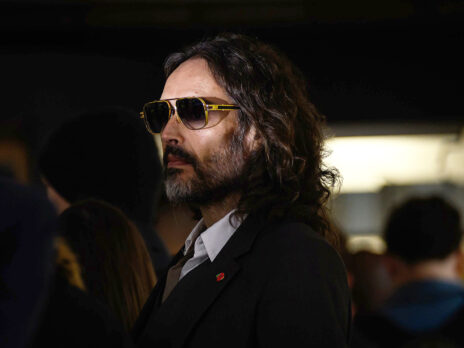

This article appears in the 05 Nov 2026 issue of the New Statesman, Nigel Farage's bastards
Join the debate
Subscribe here to commentThey seem like a handsome and charming bunch of fellows.
“Opinions that once seemed unthinkable – on ethnicity or Englishness – are now confidently uttered on Question Time.”
But they were (and are) always being uttered outside the politically correct Westminster and media bubble. And fifty years ago they would have been uttered by many Labour MPs. And seventy years ago they would have been uttered by Liberal MPs too. The problem is that the graduate-heavy political and media establishment has lost touch with what people outside that world think.
Terrific article. Made me subscribe, and I’m no leftie by any means.