

In recent decades, a sinister new force has assumed power in Westminster. They can appear in any political party. They are formidable at converting politicians to their cause. They’re not the Blob, or the Deep State, or the Lizard People. They’re worse. They are the Budgetarians, and no matter which party is in power, they are running the country.
I discovered Budgetarianism in a research paper, published five years ago by the National Institute of Economic and Social Research. The phrase was coined by the economist Jagjit Chadha – then the institute’s director, now professor of economics at Cambridge University – who told me what it meant: “A notional, fictional way of running the economy, through imaginary numbers, rather than addressing the deep underlying problems.” Budgetarians, he said, did not seek to address “the state of the economy and the lives of the people in it”. Instead, their goal was “to invent some arbitrary target and imagine that if we can persuade people we’re going to hit that target, we’re running the economy well.”
Budgetarianism is an inherently dishonest way to run a country. It takes economic forecasts as gospel. Its central tenets are the imaginary values of “headroom” and fiscal rules that claim to limit borrowing, but somehow permit ballooning debt. At its heart is a yearly festival of boasting, assumptions and fiscal subterfuge: the Budget itself. Budgets have become undemocratic events, stuffed with policies that would never make it through the committees and assessments which apply to other policies. They consolidate the power of the Treasury, they hold back economic growth, and they make the tax system ever more incomprehensible. What if we just stopped doing them?
The performative nature of fiscal events has been obvious from the start, and when I say the start, I do mean 1733. That’s when the word “budget” was first used to refer to the announcement of a set of fiscal policies. For that we can thank one of the original backbench rebels, the Whig MP William Pulteney. In a mocking pamphlet – a fine piece of political sketch-writing – titled The Budget Open’d, Pulteney took aim at the newly announced taxation and spending plans of the First Lord of the Treasury (but certainly not “prime minister”, because that was also considered a pejorative at the time), Robert Walpole. “At length,” Pulteney wrote, his pen dripping with scorn, “the grand Mystery, which was long deemed too sacred for the unhallow’d Eyes of the People, is reveal’d.”

It sounds like Walpole’s first Budget was as prone to rumours, leaks and pitch-rolling as the hundreds that have followed since. Its contents were “known, confuted and exploded long before it was publickly acknowledg’d”, Pulteney writes. And it sounds as if the government relied, as it does today, on making up numbers – “asserting a great deal and proving nothing”, as Pulteney puts it. Pulteney even raises the familiar complaint that the Budget is a way for Walpole to consolidate power, helped by a familiar group of villains: “The Creatures of the Treasury.”
Walpole’s plan set a pattern followed by so many other Budgets: events had taken place; temporary measures were needed, and these would turn out not to be all that temporary. In Walpole’s case, the event was the collapse of a financial asset bubble (the stock of the South Sea Company) and the temporary measures were new taxes. Temporary measures introduced in other Budgets include income tax (temporary since 1799), quantitative easing (a short-term emergency fix that lasted for more than a decade), the Office for Budget Responsibility (OBR), and fiscal rules. Perhaps William Pulteney would have been amused to learn that 293 years after his pamphlet, things would be broadly the same, but worse.
Every year, just before the Budget, newspapers and think tanks publish their versions of the “be the chancellor” game. Every game starts the same – you’re given £12bn of “headroom” and you can tinker with taxation and spending. These games illustrate two things that are wrong with the Budget. First, each one is based on a set of assumptions (a “model”, in economese) about how things work and what will happen. These assumptions are confident, and wrong, and they reflect what the person making the model would like to happen. The Guardian’s version will reward you for spending on welfare; in the Daily Mail’s game, if you don’t spend big on defence, Vladimir Putin invades Estonia.
Second, they illustrate the poverty of ambition in real fiscal policymaking. The UK’s total managed expenditure last year was £1,368bn. The Budget game – played for £12bn in headroom – is about fiddling with a fraction of a percentage point. This reduces Budget measures to retail offers of the type that might get a mention in a Martin Lewis email: the day before John Healey announced this week’s Budget, BBC News reported that he hoped, by tinkering with tariffs, to slightly reduce the price of marmalade.
But the real Budget is also based on assumptions and played for fictional headroom – not how much money the government actually has, or its real capacity for spending what the surplus would be, in years to come, if everything in the Budget was true, and the forecasting model was correct. Headroom is the difference between two made-up numbers about where things would stand, years into a highly unpredictable future, if the government stuck to its promises (and stayed in power).
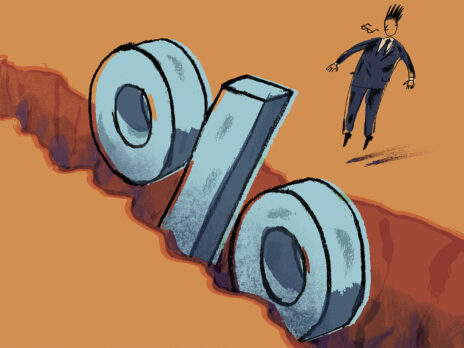
This demonstrably doesn’t happen. On average, as research by the Institute for Fiscal Studies has shown, chancellors have aimed for borrowing to fall to 1.1 per cent of GDP in the fifth year of the OBR forecast (since the OBR was established in 2010). But the reality, when that fifth year arrives, has been borrowing that averaged almost five times that level, at 4.8 per cent of GDP.
When the concept of headroom was introduced, it did mean something. Like Walpole, George Osborne had been dealing with the aftermath of a deflated asset bubble. After the 2008 financial crisis, the market for credit default swaps on Britain’s debt showed that investors were placing bets that the country might be unable to service its debts. Yet another temporary measure was needed, to restore confidence. The new OBR took over what had previously been known as chancellor’s forecasts; it provided fiscal credibility, an independent certificate that the government really did intend to reduce its debts.
But then new crises arrived, and they were very expensive. Boris Johnson and Rishi Sunak spent £370bn during the pandemic. Liz Truss spent £44bn making sure most people didn’t have to burn less gas. The spending cuts to make up for these huge outlays were pencilled in for a later time, when another chancellor would have to take the blame. The OBR had to keep making forecasts based on the information it was given, but it became increasingly obvious that the headroom was based on plans that the chancellor had no intention of delivering.
Jim O’Neill – formerly chief economist at Goldman Sachs, a Treasury minister under Osborne and an unofficial adviser to Andy Burnham – says most recent chancellors have done the best they could with the power available to them, and that it is the “political machine” around the chancellor which “seems to play this game with the public, where they’re happy to kid everybody that our long-term debt challenges are not that big a deal”. This is not, he says, a problem unique to the UK. “It’s probably true in most democracies. Many developed countries are having versions of our problem,” he told me. “People want to just keep telling their populations that if you complain enough, then we’ll never do anything that might harm you.”
But in recent years it’s become apparent that some chancellors haven’t even bothered to make a plan. In January 2024, the OBR’s Richard Hughes was asked to give evidence to the Lords Committee on Economic Affairs. Referring to the Budget that Jeremy Hunt had produced the previous autumn, Hughes said that while the government had predicted that spending on public services would fall, it had provided “almost no detail” on how this would be achieved. “We know virtually nothing,” he admitted. “It is just two numbers.” Those who described such numbers as “a work of fiction”, he added, were being “generous, given that someone has bothered to write a work of fiction. Whereas the government have not even bothered to write down their departmental spending plans.” This was the chair of the OBR, the chief fiscal watchdog, openly expressing his contempt for the dishonesty of the process.
And yet the charade continued. Large numbers of young people dropped out of the labour market, and the forecast was reassured by spending promises no politician intended to keep. A decade’s worth of immigration took place in a single year, and in the forecast this was nothing more than a positive indicator. Hard political problems were turned into a numbers game, items on a spreadsheet. When the numbers didn’t add up, a fictitious “black hole” could always be conjured. The fifth largest economy on Earth continued to be run on the imagined space between a made-up fiscal rule and a made-up forecast. Budgetarianism had won.
Why run an economy like this? Who benefits? To answer that, imagine for a moment that you are running the newly formed Department for Pub Snacks (it’s imaginary for now, but we’ll see). Bad news, Minister: one of the country’s top producers of pork scratchings, Dr Porkworthy’s, is on the brink of collapse. The good news is that you have a plan. Loosen a regulation here, change a tax rule there, and the company will stay afloat. You’ll save hundreds of jobs, and fried chunks of pig’s hide will continue to be available to any citizen drunk enough to enjoy them.
The catch is that as with most policy, you’ll need to put this through some collective discussion, perhaps with a cabinet committee. Then, your department’s accounting officers will have to come up with a realistic assessment of what it could mean for the public purse. Then, the Treasury will want to scrutinise your proposal. If it means going beyond your cash limits, it’s probably a no-go. If your plan implies a cost to any business, the Regulatory Policy Committee will also want to get involved and they might tell you that your plan is not fit for purpose. If it involves creating legislation, you will have to bid for (and wait for) a spot in the legislative programme. And then, after all that, if your plan turns out to be more costly than had been assumed, you’ll have to answer to the National Audit Office. Eventually you and Dr Porkworthy could be called in for a grilling by the Public Accounts Committee.
Ah, but if you’re a Treasury minister, you don’t have to bother with all that. If you fancy handing out a tax relief to some people you think might favour you in the next election, go for it! Just whack it in the Budget. It won’t be subject to such scrutiny in advance, and you’re guaranteed a slot in legislative process. If it turns out that your relief costs an absolute fortune in lost revenue, don’t worry: the National Audit Office only scrutinises direct public spending; money lost through tax expenditure doesn’t count. It’s for this reason that Budgets contain what Jill Rutter, the head of the Institute for Government, described to me as “lots of trivial announcements, which the Treasury would knock down [if they came] from spending departments”.
Let’s pick on one small example of policy that was made in this way. When Gordon Brown was preparing his 2002 Budget, a newly appointed Treasury minister added a tax relief for microbreweries (the Small Breweries Relief) into the bag of measures. It probably wasn’t necessary – craft beer was a growing trend in many countries at the time – but it sounded good, and it allowed the government to show support for a growing sector of small businesses for a relatively small cost (a few tens of millions per year). The new minister, who was, you guessed it, John Healey, went on to other roles, and had “Minister for Pubs” added to his title for a bit of fun shortly before the 2010 election. Over time, brewers began to complain that the relief had an unintended side effect: it helped small breweries grow to a certain size, and then (as they grew too big to be eligible for it) incentivised them to sell out to giant multinationals. But once you’ve added a relief, you can’t take it away. You’ll be the politician that destroyed the beer industry. You’ll never be served a pint again. All you can do is wait for another Budget, tweak it a bit (that is, make it more complicated) and hope this fixes the problem. Do this enough times, for enough interest groups, and you end up with a tax code that runs – as ours does – to ten million words.
That’s what’s in it for Budgetarians: “Ministers can do really poorly conceived, potentially very expensive, very damaging changes to tax policy,” Rutter says, “and the Treasury just says, ‘Oh – that’s policy.’” It is terrible economics – no private company would survive being run on the yearly whims of its finance department – but politically, it just about works.
The UK economy, like the Prime Minister’s beloved Everton, always seems to struggle in the second half. David Moyes hands out the half-time oranges, and the energy drops. Autumn approaches, businesses wait to find out what the Budget will do to their ability to invest and create jobs, and the same thing happens. This means that Budgets – even if, as Rachel Reeves promised, they are only delivered once a year – come at a massive, uncalculated cost.
The evidence for this is in the business activity data. Economists measure business activity using purchasing managers’ indices (PMI), which are surveys of the orders received by companies, their output, the prices they’re charging and how many people they’re employing. On 3 September 2025, Rachel Reeves announced that she would deliver her Budget almost two months later, on 26 November. Thus began a long campaign of pre-announcing policies, finding out how unpopular they were, and then un-pre-announcing them again. This wasn’t just terrible politics; it damaged the economy. Businesses pause spending and hiring decisions if they think the economic circumstances are about to change. They wait, and the economy grows less quickly. During that autumn of kite-flying, the UK’s composite PMI figure dipped almost into contraction – a recipe for recession, if left long enough – while the government pratted about suggesting things and then un-suggesting them. This happens, to a greater or lesser extent, every year, just so the chancellor can make a big speech and push through some poorly scrutinised policy.
This year, there was positive news for the economy in advance of the Budget, and the Treasury was briefing that much stricter controls were being placed on policy information; kite-flying was officially banned. But ratings agencies still noted that there were “reports of paused spending due to a lack of clarity on domestic economic policy in the run-up to the Budget”. Housing developers, for example, quietly put investments on hold in the month between the government’s announcement that it “expected” to introduce a new support scheme for first-time buyers in the Budget, and the Budget itself. That’s a £95bn-a-year industry – one that is currently contracting at an alarming rate – holding its breath for over a month, just so the policy could be announced by the Chancellor rather than by the housing minister.
At the same time, there are people for whom a Budget speech is a highly tradeable (and therefore profitable) event. In the weeks before the Budget, groups of people within banks and hedge funds will have markets meetings in which they’ll discuss the likely impact of the chancellor’s announcements on the prices of gilts (UK government bonds) and the value of the pound against other currencies. Traders on the “buy side” of a financial firm will take positions either in gilts, or foreign exchange markets, or in equities (company shares) that might be affected. This will all be done in advance, by people and algorithms buying securities they believe will change in price as a result of new fiscal policy. When the speech begins, trading floors will fall silent and everyone watches two screens – the TV and the trading terminal – to see how much money their predictions have made.
Chancellors mostly consider their speech as a performance, first and foremost, to these people – to the markets that decide if their decisions are a signal to buy or sell. But the markets themselves are not fooled by headroom talk. One person who works in these markets told me they consider political decisions in terms of return-on-investment. Say an investor believes that the government is going to make (or save) £10 a year for every £100 it borrows. If the borrowing cost is about £6 a year, then that investment will put the government in a better financial position, which implies less borrowing in future. It becomes a simple matter of judging whether the yield the government will get from its investment is higher than the yield the market will charge it to borrow. Borrowing for something like the warm homes plan is quite acceptable in this view – it’s an infrastructure investment with a clear effect on gas import costs, and therefore lower borrowing over time, and possibly also lower inflation. Welfare spending, on the other hand, is less welcome – when boiled down to the logic of the market, involves paying money to receive less tax, and therefore a negative return on investment. This, they said, was how a chancellor should approach their spending plans. The market is less interested in the headroom number than in the work the government’s borrowing will do to reduce debt and grow the economy.
This is how such investors approach company debt – they will look at fundamental numbers such as how much of its income it’s already spending on interest, and how much its assets are worth relative to its liabilities. Politicians never talk about these numbers in relation to the UK, because unlike the trivial headroom figure – a few billion can always be scraped together from down the back of the national sofa – they paint a grim picture. Our debt interest-to-income ratio is roughly double what it was before 2022. Public-sector net worth (Britain’s assets minus its liabilities) has been in sharp decline since 2008, and is now at around -30 per cent.
The market, however, is well aware of these numbers. Its investors are not interested in funding what one described as the view that the government is “just a pot of money” to be argued over by 403 Labour MPs. And yet this is precisely the view that the Budget process encourages: an ongoing argument, not about what can be achieved, but about who can get the most out of the Treasury.
The third Tuesday in September is the Prinsjesdag (Prince’s Day) in the Netherlands. As in Britain, the Dutch parliamentary session is ceremonially opened by the monarch, and this is accompanied by the Hoedjesparade – a procession of ladies in enormous hats – before the Dutch finance minister gives a fiscal statement. Despite the focus on the hats, the Dutch budget is much more sensible than ours. It is usually more of an update, because each new government sets its budgetary rules and spending limits when it is elected, and sticks to them for its whole four-year term. Sweden sets a three-year expenditure ceiling; the EU’s fiscal framework sets a budget and expenditure ceiling over seven years. New Zealand has legislated to reduce uncertainty in fiscal policy, so businesses don’t spend months waiting to confirm the latest change of direction in the tax system. Germany’s treasury is split into an economics ministry and a finance ministry (as was Britain’s, briefly, during Harold Wilson’s early years as PM). It’s not that any one of these is exactly what Britain needs, but that across the global economy there are countries that have achieved lower debt burdens, or lower borrowing costs, or more investment, or less impact on their economies, by making fiscal policy in a more grown-up manner.
Like many in financial markets, Jim O’Neill recommends a long-term focus on investment. He would bring in an OBR-like body for infrastructure, which would help Britain to distinguish investment from day-to-day spending, as Canada does, and to say with as much certainty as possible if it is the right thing for our economy. Instead, we have a system in which politicians can dream up megaprojects such as HS2, cancel them and un-cancel them again at vast expense. Instead, we have a system in which long-term investments can be robbed for headroom, for the benefit of a chancellor’s speech.
The self-important speeches are integral to the problem, the echoes of Gladstone and Disraeli, who spoke for four or five hours. Those Victorian statesmen spoke from the centre of an empire that represented a quarter of global economic activity, and half the world’s trade. Who really believes the boasting and self-congratulation of today’s fiscal bloviators?
Imagine a Budget speech that lasted ten minutes. It would be made by the finance minister of a government that had set its fiscal direction when it arrived, not because it lacked ambition, but because it had a plan and was prepared to commit to it, setting out its full plan for economic policy, from productivity to regulation to immigration and a parliament’s worth of public spending – something in the region of £6.5trn – in one go.
The minister would present a forecast for the year ahead, and they would be able to do so with clarity because taxes and benefits would be properly indexed, rising with the rest of the economy, rather than being frozen wherever possible in stealthy admissions of fiscal failure. Imagine the confidence this would inspire in businesses, and investors, and workers. Instead, we have a fiscal framework that has been gamed and tinkered with for almost 300 years, which is ineffective at controlling spending, at reducing debt, at helping to create growth. The only thing it’s good at is allowing chancellors to fiddle, while the system slowly burns.
[Further reading: Britain is giving Andy Burnham a chance]
Content from our partners



Related
This article appears in the 28 Oct 2026 issue of the New Statesman, Bin the Budget
Join the debate
Subscribe here to comment