
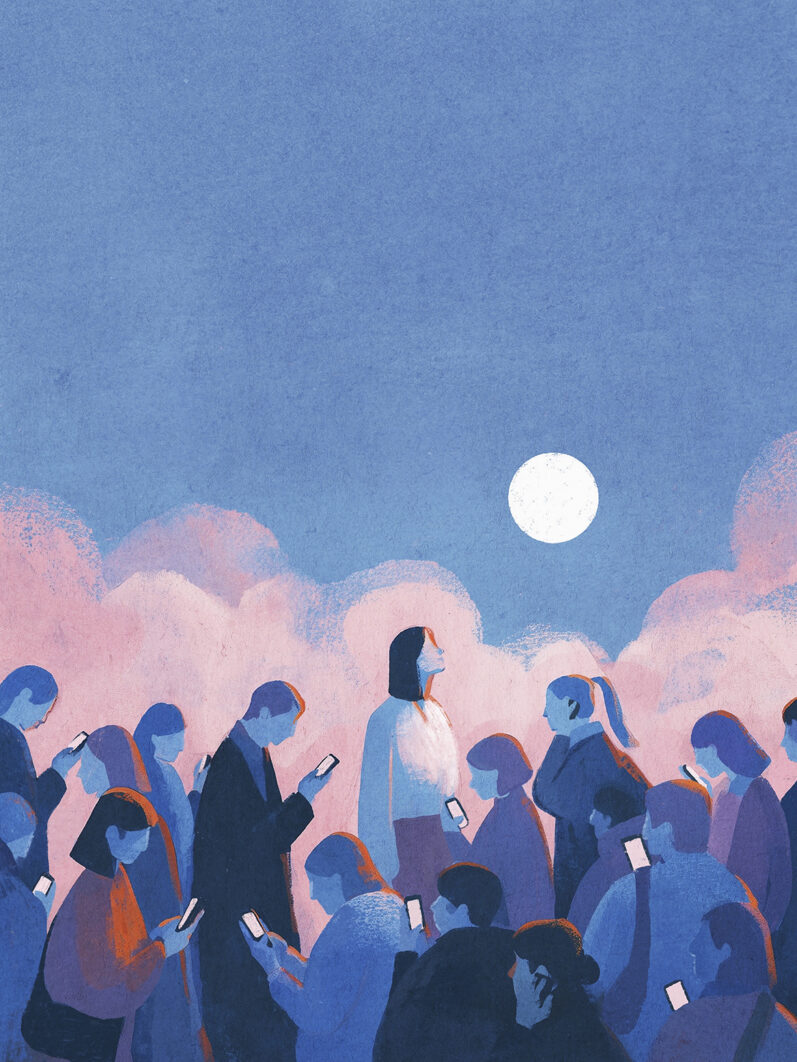
The Prime Minister is preparing to announce a social media ban children under 16, his team briefed the press on Monday (8 June). This was, according to the Times, a “last-ditch attempt to win over Labour MPs before Andy Burnham’s possible return to parliament.” If that was the hope, it may well backfire. For neither the content of this anonymous briefing, nor timing, speak to Sir Keir Starmer being a conviction politician, committed to well-thought through, evidence-based policy making.
Why Starmer’s team would choose to brief out an as yet unmade policy announcement, when the government was actually doing something else, is utterly baffling. At the exact same time, it was confirmed that phone companies like Apple and Google would be given three months to comply with demands that their devices include technology which makes it impossible for children to take, share or view nude images. Such a move could be game changer in protecting children. It’s thought that 91 per cent of online child sexual abuse stems from self-generated content – images that young people take of themselves.
Requiring this technology be included in phones is eminently achievable. The capability already exists. “Apple and Android already have the ability to detect naked images, to detect nudity,” the victims minister, Catherine Atkinson told the BBC’s World at One. “It can recognise genitalia, and buttocks, and the chest.” It can then block the device from taking the image altogether. “I’ve literally seen it work with my eyes,” Jess Phillips, the former minister for safeguarding and Violence Against Women and Girls told the same programme. Phillips stepped down last month in part because of Starmer’s inability to legislate in this area. In her excoriating resignation letter, she accused the Prime Minister of leaving children “without a safety net” because he was too “worried about tech bosses”. Phillips had presented this exact same proposal more than a year ago.
Like so much else during his tenure as PM, Starmer had to be dragged kicking and screaming to do it. So, too, with any potential ban on social media use for under 16s. The idea that he now wishes to make such a move his “legacy” is laughable. It’s understood that up until January, when more than 60 Labour MPs signed an open letter calling for a ban, the PM was not in favour. He had barely engaged with the issue at all. His own children valued social media, he told MPs, and he couldn’t see the problem.

Starmer’s mind has been changed, reportedly, by two things: a meeting last month (May) with bereaved parents of children whose deaths were linked to social media and, according to the Times, by “surveying evidence from Australia”, which brought in such a ban in December 2025. Ten platforms – including Tiktok, X, Facebook, Instagram, YouTube and Snapchat – are covered by the Australian law.
What is this powerful, persuasive evidence? I have been unable to find it. Just this past week, the woman in charge of delivering the policy – eSafety Commissioner, Julie Inman Grant – told journalists the legislation had been a “very blunt force approach” that was drafted far too quickly. She likened the under-16 age verification laws to trying to “fence the ocean”. Her first official report on how the ban was working in March showed major problems. The majority of children remained on the platforms that were supposed to be prohibited, and there had been no notable change in cyberbullying or image-based abuse reported by children.
Early studies have similarly suggested the ban has not worked yet. Research, published by Australian university academics in May, surveyed 1,027 young people aged 10 to 17. Six in ten (61 per cent) of under-16s who had previously been using the now-banned platforms reported little or no change in their social media use. “For the majority of young people surveyed, the ban was ineffectual”, the researchers concluded. Only a quarter of children said their social media use had been affected by the change in law.
To make matters worse, the research showed that the ban had had a negative impact. Young people were engaging less with the real world. For the children whose social media use had been significantly disrupted by the ban, half (51 per cent) said they were now getting significantly less news.
Research conducted by the Molly Rose Foundation in March 2026 made similar findings. It also found three in five (61 per cent) Australian 12-15 year-olds who held accounts on restricted platforms before the ban came, still had access afterwards. Ian Russell, Molly Rose’s father, appears to be in a minority of bereaved families who caution against a blanket ban. But, as he rightly points out, there is agreement that the current situation is harmful to our children. It cannot and must not continue. “Parents are united that change is needed to protect children from appalling harm online,” he argues. The question is how best to do that. Russell wants action that tackles the “addictive and dangerous design” of many social media sites and apps as a priority. There is danger in rushing to a ban that “offers the perception of security but is letting children down in practice,” he warns.
It is too early to tell whether Australia’s social media ban will work in time, but as it stands there is plenty to suggest caution in copying such a model. It is unclear to me why the government would rush to legislate before the results of two UK studies have been analysed, either. One, involving 4,000 12-15 year olds, will not report until 2027.
I cannot help thinking that while obviously well intentioned, it is naïve to think that one simple, blunt tool can fix this entrenched, pernicious problem. This does not mean doing nothing. The crackdown on online child sexual exploitation of children is a strong first move. More must follow that targets how social media sites and apps operate. Children, frankly, should not be fed any content via algorithm that they (or their parents) have not explicitly chosen to view. As Phillips put it, watching a video about fast cars should not lead you to end up at Andrew Tate.
A social media ban for children under 16 has enormous public support. It did in Australia too. It is understandable why Keir Starmer has latched onto it. It may well be a helpful part of an arsenal of actions required to combat the appalling mental health and loneliness of a generation of young people. But I remain unconvinced that it is the quick fix that many portray it to be, and that this now ailing politician believes will provide him with a lasting legacy. The truth is undoubtedly more complicated. We need to look at ourselves as parents, at society more generally to ask why our children are so unhappy. Yes, the tech giants who prize profit over safety and safeguarding are responsible, but so are we.
[Further reading: Nick Clegg is not sorry about the AI revolution]
Content from our partners


Related


Join the debate
Subscribe here to comment