Return to: Home | Politics | Economy

After the big squeeze

Irwin Stelzer

Published 19 February 2009

This is not the New Depression, but we are on the way to discovering how the New Capitalism will operate argues economist Irwin Stelzer. And in an online exclusive, Vince Cable calls for bonuses to be linked to long-term performance.

After the big squeeze

Students at Harvard's John F Kennedy School of Government succeed as policymakers if they take away only one message: "Ask the wrong question, and you get a useless answer." That message is too often ignored in the debate about the future structure of the British and American economies as they plough through the economic downturn. Ask whether this is a recession or, as Ed Balls argues, a depression, and you waste hours comparing our situation with the often-misremembered 1930s (Britain did quite well without much government intervention, and America suffered 25 per cent unemployment in spite of huge government intervention). Since our definitions of "recession" and "depression" have all the precision of a Gordon Brown response at PMQs, there is little point to the exercise that led Balls to the erroneous conclusion that we are suffering the worst economic malady in a hundred years.

The days of 50-to-1 leverage are over: banks will be required to rely more on shareholder capital in their businesses

Next wrong question: Have we seen the last of unfettered capitalism? But that red-in-tooth-and-claw model never existed. Market capitalism has always been characterised by rules, or fetters. Securities can be peddled only after meeting disclosure rules; houses can be built only after satisfying planning regulations; construction workers are protected by myriad safety regulations; the quality of the air we breathe is determined by government rules. There's more, but you get the idea.

The correct question is: will capitalism survive the downturn, and the increase in the reach of government that it has engendered, not only in Britain, where the Prime Minister has undertaken the task of saving the world, but in the United States, where President Barack Obama has accepted the more modest charge of reviving the national economy?

The answer to that question is an unequivocal "yes". We are not, as Newsweek recently argued, "all socialists now". Angry British subjects and US citizens do enjoy seeing their bankers serve as piñatas to parliamentary and congressional inquisitors, the silliness of whose questions is matched only by the vacuity of the bankers' responses. But Americans still vote for middle-of-the-road candidates, and there are no demonstrations in Britain demanding the restoration of Clause Four.

The alternatives are just too grim, and anyhow no more immune to the problems the capitalist economies face. Russia, despite or more likely because of the government grab of private property and confiscation of foreign investment, is in crisis as its rouble teeters on devaluation, unemployment rises, and the new commissars who studied economics while working in the security services prove no better managers than oligarchs who made off with a large portion of the nation's wealth.

China, its economy ruled by an authoritarian regime that controls the banking system and the major means of production, is not doing much better. Despite manipulating the renminbi to keep its value at export-subsidising levels, the regime is unable to prevent 20 million workers from disconsolately heading back to their rural homes after being cast adrift in the cities, adding to the reserve army of the unemployed. This is a combustible group of the kind that Marx envisioned would topple capitalism, not riot against its communist masters.

The final alternative to the US and UK models is typified by France, its hyperactive president an unrelenting critic of the American hyperpower, and now of Gordon Brown's decision to cut VAT, a move enthusiastically applauded by Ken Clarke, whose birdwatching skills are of little use when it comes to the hard work of analysing economic phenomena. The French electorate apparently is content to accept slow growth, protectionism and high levels of unemployment in good times to avoid some of the volatility of Anglo-Saxon capitalism. And instead of allowing market forces to correct excesses, France relies on the occasional riot to force governments to do what markets do in the US and UK to correct inflation, or wage discrepancies, or too-high tuition levels.

So we are back to the capitalism of Britain and the US, which, for the purposes of discussion, we can treat as broadly similar despite Britain's more comprehensive welfare state and greater taste for regulation. That capitalism will survive, not because it is perfect, but because it has the capacity to reform in response to the demands of a democratic electorate. Theodore Roosevelt attacked "malefactors of great wealth" and passed antitrust laws that reined in the cartels and monopolies. His cousin Franklin D Roosevelt later attacked the "practices of the unscrupulous money changers", and established the Securities and Exchange Commission to regulate their activities. Republican Teddy's Square Deal and Democrat FDR's New Deal reformed capitalism and restored faith in markets that had been stripped of their worst abuses. Not all abuses, nor all the future maladies that might be dreamed up by financial innovators run amok, but the worst of the day.

Which brings us to another sensible question: what form will the New Capitalism take? It is a good guess that the nationalisation of the banking systems will be reversed. Banks are eager to rid themselves of the need to trek to Downing Street or Washington in order to conduct their business, and have a huge financial incentive to buy back the preferred shares that governments have purchased and that eat up a large share of profits. The next gen­eration of auto industry executives would rather decide just what vehicles their customers want than leave that decision to America's politicians or Lord Mandelson. And as much as the electorates in both countries are appalled by the behaviour of the captains of industry, they are at least equally inclined to deny their political leaders increased control over their lives and livelihoods.

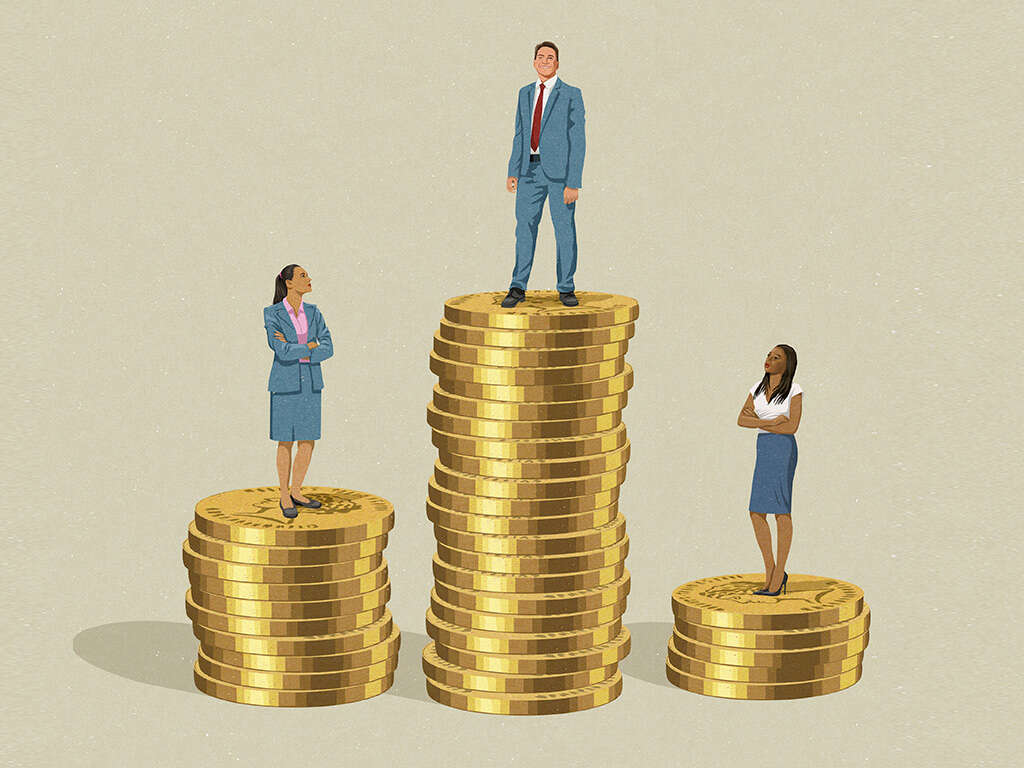
What will emerge is a new capitalism, the contours of which are already visible. It will be a system in which high incomes will be unacceptable unless they are demonstrably related to economic performance. No more golden goodbyes for executives who have brought their companies to ruin; no more huge bonuses in return for short-run, illusory profits. Yet no rules against making large fortunes; Bill Gates, who has built a company that changed the way we live, Warren Buffett, who risked his and his shareholders' capital in pursuit of profit, and the entrepreneur show-off Richard Branson have all escaped public obloquy.

Financial institutions will operate under a new set of rules. The days of 50-to-1 leverage are over: banks will be required to rely more on shareholder capital in their businesses. But the present tendency to deploy armies of regulators to supervise banks' lending and other activities will soon prove feckless. Instead, there will be rules that align financial institutions' interest with the public interest. Lenders will have to keep what Wall Street calls "more skin in the game". No more mortgages and other loans to those who cannot repay, with the risk then passed on to others via securitisation. Mortgage lenders will have to retain some of the risk of non-payment. Rating agencies will not be allowed to dole out AAA ratings in return for fees. Bonuses will be geared to long-term profit performance.

It won't be capitalism as many of its current practitioners recognise it, any more than the oil-monopolist John D Rockefeller recognised the reformed system instituted by Teddy Roosevelt, or the money changers recognised the reformed temple FDR constructed to contain their activities. But it will be capitalism, a system in which men will be led by a slightly more visible hand . . . You know the rest.

Irwin Stelzer is director of economic policy studies at the Hudson Institute

Post this article to

  • Digg
  • del.icio.us
  • newsvine
  • Reddit

36 comments from readers

Tom Knott
19 February 2009 at 12:53

What has been going on in recent years has not been "capitalism", it has been another sort of "ism" as yet undefined, but perhaps unknown. The "Anglo-Saxon" model of the UK and USA (historically utterly foreign to the early Angle and Saxon cultures) has really been networks of groups that have neither been democratic nor responsible. Within the M25 in the UK the London Mediocracy, and the conjoined twins of the Washington DC Beltway and Manhattan, there have been interlocking groupings of politicians, financiers, lobbyists, and all their media flunkeys living in their own world for their own aggrandisement. My theory is the Flying Pig Theory of Economics, that is not limited to the present crisis, but which I believe to be valid historically. Quite simply it is that power groups given enough scope will launch Flying Pig Policies that are the whole construct of their economic and political management. Alas, sooner or later, the Pigs will hit the ground. Then we all have to start again, of course with the peasants and workers paying the price. At the moment in London and Washington all they are trying to do is to rescusitate the Pigs, and catapult them airborne before the next round of elections.

bigsta
19 February 2009 at 16:20

i dont agree because if u rad really clearly u will see it say..What has been going on in recent years has not been "capitalism", it has been another sort of "ism" as yet undefined, but perhaps unknown. The "Anglo-Saxon" model of the UK and USA (historically utterly foreign to the early Angle and Saxon cultures) has really been networks of groups that have neither been democratic nor responsible. Within the M25 in the UK the London Mediocracy, and the conjoined twins of the Washington DC Beltway and Manhattan, there have been interlocking groupings of politicians, financiers, lobbyists, and all their media flunkeys living in their own world for their own aggrandisement.

writeon
19 February 2009 at 20:21

This article is very superficial indeed. Low on specifics, data, observations; but has an bulging ideological content disguised as 'economics.'

AlfredMarshall
19 February 2009 at 20:31

Selzer, forced to re-examine his free market ideology, comforts himself by drawing incomplete conclusions. He is right that businesses will use less debt and that disproportionately high salaries will end. But he fails to recognise that service businesses, which account for 80 per cent and more of advanced economies, have no substantial capital requirements. They need humans talented in the art of creating value by working together and with their customers. They have no need for shareholders or bank loans; so investment banks and stock markets are both now history. What the world needs now are service partnerships that share the value they create with their customers, distribute the money they make fairly among their employees and provide resources to support services essential for healthy societies.

In short, (and there is no better word for it): socialism.

writeon
19 February 2009 at 21:38

Seltzer has a track record of being wrong. He's a comforting propagandist and apologist for capitalism gone wild, but don't be fooled. This is a systemic and structural crisis, which is only just beginning. The worst is yet to come.

For example the black, debt hole, that's Eastern Europe, which is teetering on the edge of an abyss. Eastern Europe is drowing in debt and risks dragging down several large Western banks.

The European Commission has produced a report that suggests that Europe's banks are in deep, deep, trouble, that their losses ammount to somewhere beteween 40% to 50% of their total loans. 25 trillion dollars! This is a staggering sum. If this report is accurate, then Europe's entire financial system is bust. Not only that, the chances of Europe's governments being able to plug this giant hole, are remote. So, we are probably on the edge of a slump of epic proportions that may well dwarf the Great Depression. But Irwin's still confindent about capitalism's ability to just bounce back, like a shiny, coloured, beach ball. Poor, deluded, sod.

pianoman
19 February 2009 at 23:08

I'm unconvinced by his suggestion that his is not a new depression. Its looking like this more each day and the article has the smell of another defensive of the clearly indefensible

michaelpetek
20 February 2009 at 10:19

"This is a combustible group of the kind that Marx envisioned would topple capitalism, not riot against its communist masters."

Level 5 of Hu Jintao's Wedding Cake (We rule you; we fool you etc.) won't dare riot.

If they do Level 3 will shoot them without batting an eyelid.

Nilsey105
20 February 2009 at 11:32

" That capitalism will survive, not because it is perfect, but because it has the capacity to reform in response to the demands of a democratic electorate."

Since when did the process of democracy have anything to do with the process of the hidden hand of market forces? Was it in the 1930s with the rise of Fascism in Europe i wonder.

As in the 1930s we have the Austrian Banking system on the verge of total collapse. Lets hope we dont go any further dont that same road.

Near the entirety of East European countries are being held back from the precipice by the Austrian banks if they fall over the edge then it looks as if German Banks will follow. Not only that but we also have Eire, Spain, and Italy on the verge of dropping off the edge.

The latest news regarding the motor industry is that Saab have filed for protection from its creditors. What is the next auto company to go pop, Vauxhall in the UK, Opel in Germany? Take your pick theres lots out there.

The consequences of industrial organs closing down is irrelevant for Mr. Stelzer. Unlike it is for those who who in those organisations or are in the support industies. Mr Stelzer has a safe job so he takes the begger thy neighbour philosophy safe in the knowledge the market will right things sooner or later.

This recession/ depression/slump, is nothing like any other that has preceeded it. But Mr Stelzer fails to recognise it. Where is his analysis of the effects the TOXIC DEBT is having on the banks and the wider economies of the world. If he wasnt so blinkered in his very narrow views he would see the wood and not just the trees.

homo ludens
20 February 2009 at 12:32

It's hard not to suspect the NS of mischievous intent on occasion.

That Dr Stelzer, the fulsome unabashed child of the era of Reagonomics and the Rasputin to the Murdoch Royal Court and privileged if unofficial advisor to the Blair/Brown Government, should brazenedly surface in the NS to deliver a breezey lecture on how to tweak the 'mildly' dysfunctional system that he was a significant architect of is only slightly less gob-smacking than Tony Blair's recent Daniel David award for his contributions to world peace.

Did not Stelzer, formerly of the American Enterprise Institute, spearhead the new American Economic Model into the New Labour camp with its emphasis on minimal State influence and uncritical homage to the panacea-like qualities of the free market?

The man who took the political out of political economy to leave a system ruled by the unbridled appetite of laissez-faire market capitalism but without any restraining moral, i.e. political, dimension.

Amazing. He displays no embarrassment either. Astounding. I need to go and lie down for a bit.

William
20 February 2009 at 12:59

Perhaps if Irwin Stelzer had teamed up with the ruling elite and taken its Anaphylaxis serum none of this would of happened.

AlfredMarshall
20 February 2009 at 13:00

Guys.

Selzer's contribution is welcome precisely because it represents another viewpoint.

Nihilists who seem to welcome the imminent collapse of the world economy, mass human suffering , violent class conflict and possible war aren't.

The socialist argument is of the people, for the people and by the people. It's about making the world better, not worse, for everyone and not just the ones you agree with.

It starts from a clear understanding where value is created and builds out from that.

Value is created by human beings working interactively , not by shareholders, bankers, rich people like Branson, Gates, Murdoch and Buffet, or by boards of directors, government regulators or any of the other leadership elements of a system that is now exposed as being so parasitic and value-destroying. Value is created by you and me and our family and our friends and neighhours and by all the people we want to help and assist. It can't be measured with money.

This is not a wishy-washy statement of liberal sentimentalism. It is a hard-headed declaration of principles that will change the world.

But first. Stop being so nasty everyone.

writeon
20 February 2009 at 19:32

Eddie,

It's hard not to appear frustrated with Stelzer and his 'other viewpoint', as it's the viewpoint of the establishment who have virtually destroyed the UK's economy over the last thiryt years. Their incredibly narrow, primative, and dogmatic version of 'economics' and how the 'free market' functions, has had a profoundly negative effect on society, and now we are all going to reap the 'rewards', probably for decades.

For thirty years, and not just in the UK, we have been moving in the wrong direction economically and socially. This direction; which some who call a right-wing, counter-revolution, a class-war; after the great, democratic boom of the sixties; was a vicious attempt to reverse time, and re-establish 'market values' at almost any cost. Fundamentally, Thatchersism was about Power in society, who cracked the whip and who didn't.

We've had over thirty years of Stelzer, and his 'alternative viewpoint' which has brought us to the edge of catastrophe and ruin. Enough, is surely, enough.

Philip Proust
22 February 2009 at 10:49

Stelzer wants to divert attention away from the question of the severity of the current downturn, as if that were unimportant, or 'the wrong question'. Clearly, however, if what we are facing is more like the 1930s than the mid-70s or early 90s, then a very different kind of response is required from national governments.

More probably the crisis is taking a form that has no previous parallel, in which case the old remedies will be ineffective, or make the situation worse.

Stelzer's article is based on an unquestioning faith in the resilience of the current economic model: 'capitalism will survive, not because it is perfect, but because it has the capacity to reform in response to the demands of a democratic electorate'. And what arguments does he provide to back this assertion? That capitalism has always managed to so in the past? The last depression was only really defeated by a world war. Paradoxically, capitalism only got back on its feet in the West through the victory of the Red Army and the post-war application of US military power and Marshall Plan funding: this is hardly a good case of capitalism reforming itself through the prompting of a democratic electorate.

Stelzer remains glued to the conviction that market forces should be 'allowed to correct excesses', as if the past 12 months have not graphically shown the bankruptcy of this dogma, You would have to think hard to discover a better and more threatening case of market failure. (Global warming is a good candidate for that hobour.)

Stelzer writes as if all these paradigm-shattering events we are living through are just a bad dream; and that when we wake up the old verities will be re-instated, except in a slightly tweaked and more reassuring form.

writeon
22 February 2009 at 19:20

But in this world, the best of all possible worlds, we are merely living through a bad dream; soon this temporary aboration, this crisis, will be over, and we'll wake up to a bright, new day, of endless opportunty for homo capitalismus, we have to believe this. It is our faith. It is our magic.

We've created a pefect system, close to a utopia, a system that, even if we don't really understand how it functions in detail - it works - and miraculously, according to the official dogma, is self-regulating. All we have to do is stand aside and let it provide for us, provide everything we need, or will ever need. Capitalism has the ability to anticipate our needs before we even realise we have them. It's miraculous.

writeon
22 February 2009 at 19:39

What frightens me about Stelzer is that he truly seems to believe in accepted and established mythology of Captialism. He isn't alone in this. When the ruling elite and their propagandists go down this road, we're all doomed.

The ruling elite have to see, understand, and recognise the difference between fact and fantasy, between the public ideology and societies economic structure. If they begin to confuse the two, and prefer the fantasy, they lose control lead us all towards disaster, which is what is happening now.

The system isn't 'self-regulating' and it never was, isn't, and never will be. This is an incredibly dangerous article of faith and an almost perverse dogma, that if followed by true believers, leads to collapse.

Fundamentally, the Capitialist system isn't 'self-regulating', if left to 'itself' at all, it's actually 'self-destructive' on a massive, collosal, scale. Therefore, it needs careful, rigid, control, precisely because of the incredible productive forces it releases, forces that ultimately lead towards destruction, over and over again.

Nilsey105
22 February 2009 at 21:03

writeon

in a nut shell what you are saying is that Marx was correct in saying " capitalism carries the seeds of it's own destruction "

writeon
22 February 2009 at 21:29

Nilsey105,

I suppose I am saying that, in a nutshell. Though this doesn't mean that I'm opposed to all aspects of 'free market' mechanisms. I don't think Marx envisaged a time when Capitalism, with its ethos and dogma of unrestricted, eternal growth, in an infinite space, would ever reach the point where the boundaries of a planet with finite resources would be reached.

This is complex, but there do seem to be 'mechanisms' built into Capitalism that, even under 'normal' circumstances, lead towards boom 'n' bust, with terrible consequences for soiciety. Though recovery usually occures after a period of 'reconfigurateion.'

This time, things look different, the world isn't the way it was sixty or a hundred years ago, a lot has changed. Now Capitalism isn't just ramming itself into the limitations of individual national economies or regions, today Capitalism has become a threat to the very structure of our planet's ecosystem, and the life-support systems we rely opon to maintain human civilization. This time things are different.

So we don't just have the mother of all economic crises, perhaps, or so it appears, the biggest crisis ever; at the same time we are faced with massive environmental challenges, the like of which we have never seen.

In a nutshell, we can no longer afford the age of greed. It's too primative and too destructive to be allowed to continue. Capitalism served its purpose, releasing, for good and ill, massive productive capacity, but now it's over, and we need to make other choices. The 'self-regulating' system is no longer of benefit to us. It has become a threat to us, because left to itself the system not only eats up everything in its path, it then starts to eat itself up as well, and us along with it. Capitalism turns itself into a Doomsday machine.

Nilsey105
22 February 2009 at 23:17

writeon

Over the past 8 months or so, you, CJ and I have been saying very much the same thing about the CMP.

And i dont disagree with what you are saying now but i feel you not concentrating hard enough on the destructive processes that are inherent within the CMP.

The social destruction upon individuals, families, societies , nations ,etc, are all left to be discussed at some later date, if ever. Whilst at the same time it is the concept of "capitalism" itself that becomes the pinnacle of debate. This then takes us to a distorted view of what it is that is so desrtuctive about the CMP.

Your analysis holds that commodities are finite, i cant argue against that point, but that is where your discussion ends abruptly. My point is that we continue after, the point you terminate your thoughts and consider the social relations that have been terminated via the "busting" of capitalism and what will replace them when a renewal be implemented.

kurringai
23 February 2009 at 01:34

"The correct question is: will capitalism survive the downturn....The answer to that question is an unequivocal "yes" ".

This is just assertion, with Stelzer's reason being that the other alternatives (the grimmest which he lists and the most attractive which are not even in the article ) as too grim.

For him it is too grim, because capitalism is what he lives for. But its over. There'll be some sort of market mechanism, but not the sort of return to what we had.

FDR, it needs to be said, never worked the US out of depression from a position of staggering debt. This is a big difference and the result now will be a massive shift of political power to the East, to those countries we colonised and removed the wealth from for generations.

Choices Europe and the US had back then as hegemonic powers are foreclosed. Asia will ensure that curtailment happens.

It's over and your friends were the ones which called time on it through their behaviour, Mr. Stelzer.

writeon
23 February 2009 at 08:54

Nilsey,

The reason for the 'termination' is that I fear we aren't just talking about a crisis of 'capitalism', but something far bigger, especially when one factors in the massive environmental challenges we face; climate change, destruction of the environment, resource deplition, species exstinctions, rapid population growth, urbanisation, the fossil fuel crisis...

I have enough difficulty trying to analyse the crisis of capitalism, and attempting to find positive alternatives and ways forward, that are 'realistic', and function within the rules of the game, let alone if I try to envisage a radically different soicio/economic system which might succeed in replacing capitalism.

This is, a form of cowardice on my part. I can't emotionally, and don't want to honestly face up to the consequences and logic of my own arguments, because if I did, I conclude that our present way of life was doomed and we are heading inexorably towards a collapse of our civilization. That our way of life, is actually, a way of death, or at least that's how it's going to be for millions and millions of people. What we are seeing now, this crisis, is merely the tip of the iceberg. The Titanic is holed beneath the waterline and beginning to list, it's fate is sealed, yet most people don't realise it, and possibly never will. We should be organising the orderly transition to the lifeboats.

And now I sound like a prophet of Doom, that we are enterning the first stages of a civilizationaly crisis and arguably it's too late for remidial action or mitigation of the worst effects. What we have to do now is something else entirely. Move into survival mode. Plan for a new dark age and build 'monastries' where the best parts of our civilization can be protected and hopefully survive for some future era.

This is pretty gloomy stuff and makes me sound like James Lovelock. Unfortunately, I think he may be right.

writeon
23 February 2009 at 09:07

I don't believe we are going to see a 'revolutiion' and capitalism replaced by socialism. I think the system will collapse and be replaced by something which is arguably worse, a new type of fuedalism, tribalism, or warlordism.

If one looks around the world, this appears to be happening already. The edges of our civilization are beginning to fray and unravel, and older, more brutal, forms of social and economic organisation are re-appearing.

I think that capitalism was a system based on collosal exploitation, not just of people, but of the earth's resources and environment, but the creation of so much wealth had a price, and that was the destruction of the very environment the wealth creation was based on. So capitalism was like a man sawing off the branch he was sitting on.

So massive, and temporary, wealth creation is leading to our longterm impoverishment as a civilization. We've undermined the material basis for our civilization through rampant and terribly short-sighted greed, gorging ourselves to bursting point, with scant regard for the future consequences.

We are 'simply' consuming far more than our planet can bear. There is no future for exponential growth on a finite planet. I don't think the answer is a socialist growth model replacing a capitalist growth model.

frenky71
23 February 2009 at 13:51

I have very boast cartoons in the article, it is really meaningful and very nice!

Ing. FRANEK

frenky71
23 February 2009 at 14:43

I have appreciated the cartoons, because it is very well prepared and professional! Thus, I would like to thank artist, and I wish him that he managed to remain in the considerable work!

Ing. FRANEK

writeon
23 February 2009 at 16:05

Coming home from the beach, it suddenly struck me why the government hasn't nationalized the banking system already, when this is the only sensible way forward.

It isn't just rightwing, liberal, ideology; no, the reason is far simpler. If they took over the banks the state would become liable for the vast losses the banks are hiding in offshore subsiduries. Not only that, suddenly they would have unfettered access to the books and the true, massive, and fantastic scale of the real losses couldn't be hidden any longer from the public.

The consequences, of being confronted with, and having to announce that the entire UK financial system is bust, insolvent, kaput, are incalcuable and very dangerous. The Pound would collapse, the balance of payments would tank, and a trading nation like Britain would be up the creek without a paddle.

So the government not only doesn't want to know how much has been lost, more importantly they don't want anyone else to know either. Gordon Brown and Darling are desparately trying to buy time, and praying that something will turn up before people realise just how bad the crisis really is and how much wealth has been lost, never to return.

The true scale of the losses is probably somewhere in the region of two to three trillion pounds, mostly in Eastern Europe, where the UK banks are heavily involved. The collapse in Eastern Europe will dwarf the US subprime debacle, several times over, and risks pulling the entire house of cards down and plunging Western Europe into a depression the like of which hasn't been seen since the 1920's. Obviously this would have collosal political consequences across the continent, and might even be comparable to the fall of Communism twenty years ago.

Nilsey105
23 February 2009 at 18:53

writeon

The prospect of eastern europe collapsing brings a chill down my spine.

The invasion of the British Isles by a foreign power has been successfully resisted for nearly a 1000 years. However, the economic collapse of eastern europe will see our shores being flooded by millions of our fellow EU partners from Poland, Hungary, etc ,etc,etc.

There has ,today, been a warning of it being a summer of great violent demonstrations. A return to Toxteth of 1981 is envisaged.

The purchase of 10,000 new Taser guns by the Home Office back in November 2008 and the training of 30,000 policemen, in how to use those weapons, is expected to keep the masses under control.

writeon
24 February 2009 at 11:54

Whilst it was possible for the Conservatives to mobilize the entire state apparatus in the epic struggle to crush the mineworker's, and by extension, the entire working-class, I believe it'll be far more difficult to contain mass demonstrations later on this year when the full impact of the slump becomes apparent, as the various bailouts fail to reverse or even stabilize the economic situation.

What makes this crisis so dangerous, is that it's going to hit the comfortable middle-class really hard, and they are going to be very angry, as everything they've been promised is snatched away, especially their pensions. It's always advisable not to antagonize and radicalize elements in the middle-class, as they can quickly change from being a bulwark against rapid social change, and turn into the agents of 'revolution.' If one looks at most revolutionary leaders, they are mostly the disaffected children of the middle-class. This 'revolutionary' potential, an alliance between elements of the working-class and the disgruntled middle-class, hasn't gone unoticed.

Nilsey105
24 February 2009 at 15:59

TREASURY COMMITTEE TO HOLD REGIONAL PUBLIC MEETINGS ON FINANCIAL

CRISIS

1st visit

will be to Belfast on Monday 2 March.

homo ludens
25 February 2009 at 11:51

Re-reading Irwin's tongue-in-cheek performance here, which of course hardly merits serious critique, I am prompted to consider a more worrisome aspect of his role within the formation of this country's economic policy over the past few decades.

Dr Stelzer's intimacy with the Blair/Brown Government was of course legendary within fleet street and the frequency of his visits to Downing Street reached such a level at one point that a more discreet rear entry became necessary in order to avoid undesirable and adverse commentary within the tabloidal press.

He has earned the sobriquet of Murdoch's 'enforcer' not without some justification. He has been amongst the most powerful proponents of the neoconservative ideology which seeks to minimise the role of State and to maximise the workings of the 'invisible hand' of the free market. Dr Selzer was even close enough to Gordon Brown in those heady days to be in attendance at Gordon Browns' daughter's funeral. By contrast nowadays Irwin must be increasingly alarmed at the Prime Minister's apparent apostasy. Even the 'R' word seems to be back in fashion amongst those at the very top as the imploding black hole of the American financial system threatens to suck us all in.

What we should all as citizens be particularly concerned about is to what degree people of Irwin's position may have had privileged access to Government at the highest level and, perhaps even more importantly, how much power he wielded in Murdoch's name to shape Government policy.

There is a lot of anger and pain out there just now not least in Dr Selzer's homeland. What we may know soon once the history has become fully chronicled is the full extent to which the High Priests of the outgoing economic order, such as Dr Selzer, may ultimately be held accountable. In fact it may well be that he is one of the architects-in-chief of our current misery.

If so what should we as reasonable citizens do with such a miscreant still seemingly brazened and unabashed?

writeon
26 February 2009 at 06:49

It isn't just Stelzer. He's just a powerful propagandists or guru, I prefer to think of him a representative of the ruling elite at the heart of government. Society is basically run for the benefit, and according to the values, prejudices, and interests, of a tiny elite who have as much power as the bottom 75%. Outside the elite, everyone else is really just along for the ride, and have very little real influence, let alone power over their lives. This doesn't sound much like a democracy, because it isn't. We live in a plutocracy. Democracy isn't about voting, it's about equality and social justice, and over the last thirty years, since the upheavals of the sixties, both of these fundamental areas have been squeezed and squeezed.

gnuneo
05 March 2009 at 04:35

"Angry British subjects and US citizens do enjoy seeing their bankers serve as piñatas to parliamentary and congressional inquisitors, the silliness of whose questions is matched only by the vacuity of the bankers' responses."

actually, some of the comments of the UK Parliamentarians facing the bankers had some pretty cutting things to say. Pity you apparently missed it.

"The final alternative to the US and UK models is typified by France"

there are at least 2 others off the top of my head. There is the model of economic development typified by the Grameen Bank, and that model has hardly rocked at all during the crisis - economically or financially.

then there is the area of Mondragon in Spain, and although i have no specific information, i suspect that model has also survived better than neo-liberal 'capitalism'.

and indeed, all the local economic associations, all the "share-skills", local currencies, farm-sharing, lending communities - all the institutions that are not based on exploitation are doing rather well recently, and will probably continue to do so. Is it not odd that the part of the economy based upon respect, equality and even democracy are so stable?

nope.

"The French electorate apparently is content to accept slow growth, protectionism and high levels of unemployment in good times to avoid some of the volatility of Anglo-Saxon capitalism."

ah yes, i'm sure the French look over the Channel and see the growing poverty, the weakness of the unions, the grotesque wealth gap, the results of such savage neglect of our basic educational systems, the enormous army of 'agency workers' with virtually no rights and no job security, and somehow i'm less convinced the words they would use to describe it would be "the volatility of Anglo-Saxon capitalism".

a society falling into horror would probably be more accurate, and i strongly suspect their desire to retain their social safety net and popular control stems from their view from over here.

gnuneo
05 March 2009 at 04:50

eddie: "What the world needs now are service partnerships that share the value they create with their customers, distribute the money they make fairly among their employees and provide resources to support services essential for healthy societies.

In short, (and there is no better word for it): socialism."

so there are employers and employees in this "socialism" of yours?

what is required is to integrate the finance capital and labour capital of the company together - to turn the company into a capitalist partnership, a democratic company. I would rather the decision making in the hands of the workforce, than overly intellectualised theorists centralising power making decisions, that seems to be a common characteristic of "socialism".

writeon: "This direction; which some who call a right-wing, counter-revolution, a class-war; after the great, democratic boom of the sixties; was a vicious attempt to reverse time, and re-establish 'market values' at almost any cost. Fundamentally, Thatcherism was about Power in society, who cracked the whip and who didn't."

then that is not a market - a market is a free and consensual exchange of goods or services, with certain rules attached. Thatcherism was actually a reversal of the free-market.

Philip Proust: "The last depression was only really defeated by a world war. Paradoxically, capitalism only got back on its feet in the West through the victory of the Red Army and the post-war application of US military power and Marshall Plan funding: this is hardly a good case of capitalism reforming itself through the prompting of a democratic electorate.".

in large part the build-up for the War continued the depression - or perhaps the War was the intended consequence of the Depression. The building of the Nazi war machine that was intended to turn eastward and crush the still young USSR drained the German and European capital reserves to the utmost - Hitler had no choice but attack when he did, the money had all bur run out.

gnuneo
05 March 2009 at 05:09

the Western Economies flourished only when the People, sickened once again by the senseless slaughter of their friends and kin, demanded rights and economic power. Once the money came down into the local people's pockets, the local economies could flourish. The more theft (generally in the form of profit on other's labour) exists in the economy, the slower, weaker and unstable it is.

and also, another form of highly unstable economy is the 'war economy' - this is the economic model that has brought down most Empires throughout history. Interestingly, from a psychohistorian perspective, it is also notable that the 'war economy' is also one of the most conducive to corruption on a grand scale. The idjit economic advisors to the US over the last few decades have all followed a policy program of expanding the Military Industrial Complex, it has almost never had its funding cut - and under Bush it has taken over the US economy. And we can all see the corruption in the US at historic levels.

depressions are 'created' either accidentally or intentionally, by the elite removing too much money in the form of rent/profit/tax, not leaving enough for a viable economy. This situation can be because of a build-up to war absorbing capital, but also often leads to a scenario where war can be offered as a 'way out' - the People get slaughtered for the apparent amusement of their 'rulers'.

all part and parcel of the 'Empire' meme.

gnuneo
05 March 2009 at 05:29

"Stelzer remains glued to the conviction that market forces should be 'allowed to correct excesses', as if the past 12 months have not graphically shown the bankruptcy of this dogma, You would have to think hard to discover a better and more threatening case of market failure. (Global warming is a good candidate for that hobour.)"

the market must correct. Can you imagine ANY way the overvalued UK housing stock can remain at its current value? How can that be achieved? How can the market value of those £Tns in bad debts suddenly be wiped away, and restored to their previous value? Having the tax-payer own them isn't a miracle cure - it just makes the tax-payer liable for the gap.

market forces must indeed have their way, what is required from Govt is to ensure the pain falls not upon those who were the victims, but the corrupt bankers and officials. The bubble has popped, but it is sick that some have wealth of many £1,000,000,000s, whilst millions of normal British survive on far less than £10,000 a year - many due entirely to these people's corruption in the first place.

the 'market' did not fail - it never existed, as one of its primary tenets - full information disclosure and honest trading - was violated. This was not a failure OF market - this was a failure of regulators to ENSURE a market!

and the same is true of environmental collapse - had consumers been allowed to become aware earlier of the environmental consequences of their purchasing and behaviour, then they would have changed earlier. It was the lack of free market in the Media (concentration of ownership in few hands), that prevented environmental awareness spreading earlier and faster, that prevented the free-market of consumers from changing their choices. Note how quickly people switched their light-bulbs, and are slowing the use of carrier bags.

once again, a failure of anti-trust, monopoly and oligopoly regulations - for ideological class-war reasons to boot - *preventing* the free-market.

gnuneo
05 March 2009 at 05:33

Homo Ludens: "He has earned the sobriquet of Murdoch's 'enforcer' not without some justification. He has been amongst the most powerful proponents of the neoconservative ideology which seeks to minimise the role of State and to maximise the workings of the 'invisible hand' of the free market."

as i've argued already, the reality is the opposite. How on Earth can you seriously argue that Murdock could possibly be 'free market', when the man seeks monopoly in every media, everywhere he operates?

writeon: "Democracy isn't about voting, it's about equality and social justice, and over the last thirty years, since the upheavals of the sixties, both of these fundamental areas have been squeezed and squeezed."

and we're pissed off.

homo ludens
05 March 2009 at 12:14

Gnuneo:

Free market ideologues advocated a minimally regulated market in the belief that a free market would deliver optimal outcomes. But the Reagan-Thatcher era saw more than the return of a nineteenth century laissez-faire - it was a major cultural shift that took the political out of economy and unleashed a new aggressive individualism accompanied by an equally aggressive resurgence of social Darwinism. It is important to remember how much remains as ideology - the Adam Smith view of human nature the paramountcy of competition and the dominance the market concept that has seeped into every aspect of daily life. It is all ideology and open to question.

I find your position on Murdoch contradictory. Of course 'free' markets by their own logic move towards oligopoly and monopoly - this is what made Joseph Schumpeter such a pessimist of the market system & why the Monopolies Commission became inevitable. The most powerful national economies are always great advocates of free trade in the way that dominant market players enthuse about the virtues of a free market. That is hardly contradictory!

gnuneo
05 March 2009 at 17:44

homo ludens: i understand where you are coming from, however i found many of these commonplace political-economic assumptions questionable.

"Free market ideologues advocated a minimally regulated market in the belief that a free market would deliver optimal outcomes."

yes - however, critically important, is that the actual regulations that CREATE a free-market are adhered to.

a free market where the consumers have little or highly controlled information, where entry to the market is highly restricted, and where the decisions are made under economic duress from one party, is, i'm afraid, no matter what these 'neo-liberals' claim, most certainly *not* a Free-Market.

"But the Reagan-Thatcher era saw more than the return of a nineteenth century laissez-faire - it was a major cultural shift that took the political out of economy and unleashed a new aggressive individualism accompanied by an equally aggressive resurgence of social Darwinism."

lol, i would say that a resurgence of social Darwinism is quintessential politics in the economy! But i agree.

"It is important to remember how much remains as ideology - the Adam Smith view of human nature the paramountcy of competition and the dominance the market concept that has seeped into every aspect of daily life. It is all ideology and open to question."

that is somewhat a distortion of adam smith - in fact he was very much in favour of cooperation, and even espoused a level of social welfare that NuLabour ideologues would choke on their pretzels over. What has "seeped into every aspect of daily life" is the new, openly fascist concept of 'the strong shall dominate the weak', hidden under a veneer of economics - in fact a true free market would reward cooperation far more (whilst still of course rewarding competition), for a variety of reasons that are so obvious really, they shouldn't even need saying. (ie, the fact that cooperative values are absolutely essential to human existence, which makes them higher value).

Post your comment

Please note: you will need to login or register before you can comment on the website

Read More

Vote!

Was the government wrong to sack David Nutt?

Suggest a question

View comments

© New Statesman 1913 – 2009

Tracker